The Book Thief Audiobook & Text to Speech Guide (2026) — Markus Zusak's Allan-Corduner-Canonical-Narrated Nazi-Germany-Death-Narrated Historical-Fiction 16M-Copy Phenomenon
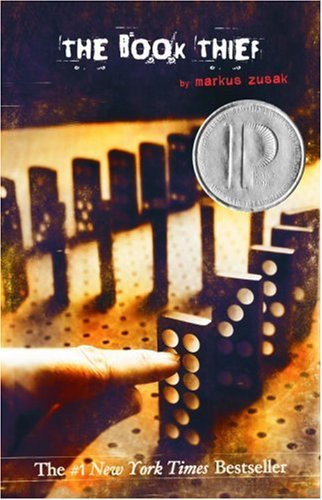
The Book Thief — Markus Zusak
First published: September 1, 2005 · Picador (Australia)
Pages: 592 (paperback)
Goodreads: 4.39★ (2.92M+ ratings) · view
Audiobook runtime: ~13h 57m · narrated by Allan Corduner (Listening Library)
Commercial scale: 16M+ global sales · sustained high-school AP / IB / college curriculum · Brian Percival 2013 film $77M box office
Cultural impact: Defining contemporary YA-crossover Holocaust-historical-fiction · Death-as-narrator literary innovation · Nazi-Germany ordinary-family perspective · universal curriculum-adoption status
The contemporary Death-narrated Holocaust-historical-fiction canonical text — 16 million copies, 4.39★ Goodreads, sustained high-school and college curriculum worldwide, and one of contemporary fiction's most-distinctive narrative-voice achievements. Skip the Libby wait with Kindle + free CastReader AI TTS →
The Book Thief is Markus Zusak's September 2005 Death-narrated Nazi-Germany-WWII historical-fiction canonical text — the 592-page novel where 9-year-old Liesel Meminger travels with her mother and younger brother from Munich to foster parents Hans and Rosa Hubermann in the fictional town of Molching (modeled on Olching near Dachau); Liesel's brother dies on the train; Liesel steals a gravedigger's handbook at the burial — her first act of book-theft. Her accordion-playing foster father Hans (a WWI veteran who survived due to Jewish friend Erik Vandenburg's actions) teaches her to read in the basement. Liesel rescues a book from a Nazi book-burning, steals from the mayor's wife's library (eventually Ilsa Hermann leaves the window open deliberately), and writes her own book 'The Book Thief' in the basement. Her best friend Rudy Steiner (the 'Jesse-Owens boy') joins her collaborations. The Hubermanns shelter Max Vandenburg, Erik's son, a Jewish fist-fighter, in their basement; Max and Liesel develop a deep friendship before Max must flee. In 1943 Allied bombing destroys Himmel Street while Liesel writes in the basement; only Liesel survives. Death carries Liesel's dropped manuscript through decades; the novel's frame reveals Death returning the manuscript to an elderly Liesel in Sydney, Australia shortly before her death. The Book Thief has sold 16+ million copies globally, is standard high-school AP / IB English-literature and Holocaust-literature curriculum worldwide, and generated Brian Percival's 2013 film adaptation (grossing $77M on a $19M budget). The 4.39★ Goodreads rating across 2,918,418+ ratings places it among contemporary fiction's highest-rated canonical texts. At 13h 57m with Allan Corduner's Listening Library canonical production, The Book Thief is the genre-defining contemporary YA-crossover Holocaust-historical-fiction primary-source text.
This guide covers the 13h 57m runtime, the Death-as-narrator mode, the Molching / Himmel Street setting, the Max-Vandenburg basement-hiding plot, the 2013 film, and every free / paid path.
Why 13h 57m Matters for Historical Fiction
Contemporary-Holocaust-WWII-historical-fiction runtime benchmark.
| Title | Runtime | Year | Goodreads rating |
|---|---|---|---|
| The Book Thief (Zusak) — this book | 13h 57m | 2005 | 4.39★ |
| All the Light We Cannot See (Doerr) | 16h 2m | 2014 | 4.32★ |
| The Nightingale (Hannah) | 17h 19m | 2015 | 4.60★ |
| The Tattooist of Auschwitz (Morris) | 7h 25m | 2018 | 4.19★ |
| The Boy in the Striped Pajamas (Boyne) | 4h 55m | 2006 | 4.08★ |
| Sarah's Key (de Rosnay) | 11h 46m | 2007 | 4.18★ |
| The Reader (Schlink) | 6h 58m | 1995 | 3.84★ |
The Book Thief sits at the mid-range Holocaust-historical-fiction runtime, paced for the 1939-1943 Nazi-Germany timeline. At 13h 57m, the novel reads comfortably across 7-10 days of commute listening or a long weekend at 1.5x.
Three Listening Modes
Mode 1 — Canonical Audio (Allan Corduner Listening Library). $14.95 Audible credit or library-borrow via Libby; Audible Plus subscribers check rotating availability. Corduner's production is universally praised as the definitive The Book Thief — his cultivated-British-Jewish-literary register is ideally suited to Death's philosophical-narrator voice.
Mode 2 — AI TTS via CastReader. Free, unlimited re-listens, adjustable speed, voice-switching for Death / Liesel / Hans / Rudy / Max. Particularly valuable for student curriculum-preparation and book-club discussion. See CastReader for Kindle.
Mode 3 — Libby library-borrow + Spotify Premium. Libby with 1-3 week wait or Spotify Premium 15h monthly audiobook allocation (93% consumed by The Book Thief's 13h 57m).
The Allan Corduner Listening Library Canonical Production
Allan Corduner (British-Swedish-Jewish actor — Topsy-Turvy's Arthur Sullivan, Defiance's Mordechai, Yentl) narrates the canonical Listening Library edition in ~13h 57m. His distinguishing contribution: cultivated-British-Jewish-literary register ideally suited to Death's philosophical-narrator voice and Hans Hubermann's measured father-figure voice, with attentive handling of the mixed German-English vocabulary and the 'little facts' author-footnote interjections.
The Book Thief does not have a second major canonical production — Corduner's Listening Library edition has dominated the commercial audiobook market since release. Zusak's 2005 publication date and Corduner's immediate canonical recognition means no commercial alternative exists at its production level.
The Death-as-Narrator Mode
Zusak's most-distinctive literary choice is Death as the novel's first-person narrator. Death's characterization: overworked during 1939-1945 (the Holocaust and WWII make Death exhausted), color-obsessed (Death sees human souls as colors), fascinated by stubborn humans (Liesel's book-theft and writing interests Death), philosophically melancholic (Death reflects on the war's absurdity throughout).
Death's 'little facts' interjections (set off typographically in the print edition) disrupt standard historical-fiction prose — short author-footnote-style observations that interrupt the Liesel narrative with Death's parenthetical comments on characters, fates, or themes. These interjections are one of the novel's most-distinctive structural features; Corduner's narration reads them with measured emphasis that makes the structural choice work sonically.
The Death-narrator mode enables three structural achievements: (1) emotional distance from Holocaust subject matter that makes the content accessible to YA readers without sentimentalizing, (2) foreshadowing (Death frequently reveals character fates in advance, replacing plot-suspense with meaning-focused engagement), (3) meta-literary reflection on the book-as-object and reading-as-resistance themes.
The Plot: 1939-1943 Molching
1939 — Arrival. 9-year-old Liesel Meminger travels with her mother and younger brother Werner from Munich to Himmel Street in Molching, the fictional town modeled on Olching near Dachau. Werner dies on the train. Liesel steals 'The Grave Digger's Handbook' at his burial — her first book-theft act. Her Communist mother disappears after delivering her to foster parents Hans and Rosa Hubermann, fleeing Nazi persecution.
1939-1940 — Learning to read. Hans — an accordion-playing painter, WWI veteran who survived due to Jewish friend Erik Vandenburg's actions, reluctantly-Nazi-Party-member — teaches Liesel to read in the basement during nights when her Werner-death nightmares wake her. Liesel meets neighbor boy Rudy Steiner, who becomes her best friend; Rudy once painted himself black with charcoal and ran the 100-meter dash in the town stadium as tribute to Jesse Owens.
1940 — Book-burning and resistance. On Hitler's birthday, Liesel attends the Nazi book-burning and rescues a scorched book ('The Shoulder Shrug') from the embers. Ilsa Hermann, the mayor's wife and Liesel's laundry-customer, notices; she later opens her library to Liesel, who begins reading and eventually stealing books there.
1940-1942 — Max Vandenburg. Max Vandenburg — Erik's son, a Jewish fist-fighter — arrives at the Hubermann house. Hans honors his debt to Erik by hiding Max in the basement. Max and Liesel develop a deep friendship; Max writes two books for Liesel ('The Standover Man' and 'The Word Shaker') on painted-over pages of 'Mein Kampf.' Max falls seriously ill in winter 1941; Liesel reads to him through weeks of coma; he recovers. In 1942 Max must flee when the basement becomes unsafe after Nazi house-searches intensify. Liesel later sees him in a Dachau-prisoner march through Molching; she embraces him and is whipped by a guard.
1943 — The bombing. Liesel writes her own book 'The Book Thief' in the Hubermann basement. Allied bombing destroys Himmel Street in one night. Liesel, writing alone in the basement, is the sole survivor. Her 'The Book Thief' manuscript is dropped in the rubble; Death finds and carries it.
Frame — elderly Liesel in Sydney. Death reveals that Liesel survived to old age, married, had children and grandchildren, and moved to Sydney, Australia. The novel's frame resolves with Death meeting elderly Liesel shortly before her death and returning 'The Book Thief' manuscript to her.
The 2013 Brian Percival Film
Director Brian Percival (Downton Abbey pilot) directed the 2013 film adaptation:
- Cast: Sophie Nélisse (Liesel), Geoffrey Rush (Hans), Emily Watson (Rosa), Ben Schnetzer (Max), Nico Liersch (Rudy)
- Box office: $77M global on $19M budget
- Reception: Mixed-positive critical reception; strong audience reception
The film covers the 1939-1943 Nazi-Germany timeline in detail but substantially reduces Death's narrator role (Death narrates only the framing) and eliminates most 'little facts' interjections. For listeners approaching The Book Thief: read the novel before watching the film for full Death-narrator mode impact.
Why The Book Thief Became YA-to-Adult Crossover Standard
The Book Thief's sustained curriculum-adoption across high-school AP / IB literature, college Holocaust-literature seminars, and adult book clubs reflects three crossover achievements:
YA-accessible Holocaust treatment through ordinary-German-family perspective. The novel approaches Nazi Germany through Liesel's ordinary-foster-family lens rather than through Jewish-victim perspective (which Anne Frank's Diary and Elie Wiesel's Night already occupy as canonical). The Hubermann family's tacit anti-Nazi ordinary-decency + active Max-hiding resistance provides a historical perspective complementary to victim-perspective texts.
Literary-prose craft at YA-accessibility level. Zusak's Death-narrator + 'little facts' interjections + mixed German-English vocabulary create genuine literary-prose density while remaining YA-accessible. Teachers can use The Book Thief to introduce literary-fiction reading strategies to students whose subsequent reading includes All the Light We Cannot See (Doerr) and The Boy in the Striped Pajamas (Boyne) at the same crossover level.
Books-as-resistance meta-literary argument. The novel's central conceit — books matter because Nazi book-burning made them matter — provides students with a meta-literary framework for why reading itself resists authoritarianism. This meta-literary dimension gives The Book Thief curriculum-adoption value beyond its plot-and-character content.
Free and Paid Listening Paths (April 2026)
Free paths:
- Libby — commercial audiobooks via U.S. library card, 1-3 week wait as of April 2026
- Hoopla — commercial audiobooks, instant-lend (check your library's Hoopla access)
- Audible Plus — rotating included-with-membership availability
- Spotify Premium — 15h monthly audiobook allocation (The Book Thief at 13h 57m consumes ~93%)
- CastReader — free AI TTS on Kindle edition (requires Kindle purchase $8-12)
Paid paths:
- Audible Premium — 1 credit ($14.95) for Allan Corduner Listening Library or purchase $18-24
- Kindle ebook — $8-12 (under copyright, no public-domain edition)
- Physical — Knopf Young Readers hardcover $18-22 / paperback $12-16
Why Kindle + CastReader Wins for The Book Thief
For students, book clubs, and readers wanting flexible re-engagement with the Death-narrator mode, Kindle + CastReader free AI TTS is the optimal path:
- Student curriculum-preparation — unlimited re-listens for AP / IB / college essay preparation and class discussion
- Adjustable pace — slow through Death's philosophical 'little facts' interjections or the bomb-shelter reading-aloud chapters; speed through action-focused passages
- Pronunciation overrides — configure Liesel Meminger, Hans Hubermann, Rosa Hubermann, Rudy Steiner, Max Vandenburg, Ilsa Hermann, Molching, Himmel Street, Erik Vandenburg, Saumensch, Saukerl, and the Nazi-era terminology for consistent AI narration
- Voice-switching — distinguish Death / Liesel / Hans / Rudy / Max that Corduner consolidates into single-narrator voice
- Book-club preparation — unlimited re-listens for discussion-group preparation without per-engagement cost
For listeners wanting Corduner's definitive production on first listen, use Audible or Libby; then switch to CastReader for student study, book-club preparation, and re-listens through the Death-narrator philosophical passages.
The Book Thief in Zusak's Canon
Markus Zusak's six-novel corpus:
- The Underdog (1999) — earlier first novel
- Fighting Ruben Wolfe (2000) — sequel to The Underdog
- When Dogs Cry / Getting the Girl (2001) — third Wolfe-brothers novel
- The Messenger / I Am the Messenger (2002) — pre-Book-Thief breakthrough, 2003 CBCA Book of the Year award
- The Book Thief (2005) — canonical text, 16M+ copies, sustained curriculum
- Bridge of Clay (2018) — 13-years-after-Book-Thief follow-up, mixed reception
For listeners building Zusak's canon: The Book Thief is his sole widely-read novel. The earlier Wolfe-brothers corpus and Bridge of Clay are typically read by Zusak completists rather than mainstream audiences. Zusak's single-work-canonical status resembles several other contemporary novelists (Yann Martel's Life of Pi, Arundhati Roy's The God of Small Things).
Related Reading
For listeners building the contemporary Holocaust-historical-fiction and YA-crossover library, these CastReader guides pair naturally with The Book Thief:
- The Great Alone (Kristin Hannah) — TTS & Audiobook Guide · Julia Whelan Macmillan Audio 15h 2m historical-fiction peer, Hannah's domestic-Alaska setting
- Life of Pi (Yann Martel) — TTS & Audiobook Guide · Jeff Woodman HighBridge 11h 57m Booker-winning literary-fiction peer
- The Kite Runner (Khaled Hosseini) — TTS & Audiobook Guide · Khaled Hosseini author-narration 12h 2m Afghanistan-historical-fiction peer
- The Little Prince (Saint-Exupéry) — TTS & Audiobook Guide · Viggo Mortensen HMH Audio 2h philosophical-allegory peer, WWII-era context
- A Little Life (Hanya Yanagihara) — TTS & Audiobook Guide · Oliver Wyman Random House Audio 32h 51m contemporary literary-fiction peer
Limitations and Honest Notes
- Under copyright — The Book Thief is not in public domain; Zusak is living and will not enter public domain under standard terms until at least 2075. No free legal audiobook or ebook editions exist.
- YA-to-adult crossover positioning — The Book Thief is commonly shelved as YA in U.S. bookstores and adult literary-fiction in Australian and UK markets. The novel's subject matter and prose density suit adult literary-fiction readers as comfortably as YA readers.
- Death-narrator acclimation — first-time readers sometimes require 20-50 pages to acclimate to Death's philosophical-narrator voice and 'little facts' interjection rhythm. Persistence rewards the structural choice.
- Mixed German-English vocabulary — Zusak uses sustained German phrase insertions (Saumensch, Saukerl, Dummkopf, Kristallnacht, Führer, etc.); pronunciation overrides in CastReader or Corduner's native-quality German pronunciations support comprehension.
- Historical-accuracy note — Zusak's Molching is a fictional town modeled on real Olching near Dachau. The 1939-1943 Nazi-Germany historical details are meticulously researched; Zusak's extensive post-publication interviews describe his historical-research process.
Related: Listen to Kindle | Audible Alternative Free | Turn Ebook into Audiobook | Send to Phone | Kindle Audiobook Free
