Interpreter of Maladies Text to Speech: Free Audio for Jhumpa Lahiri's 2000 Pulitzer Prize-Winning Debut Story Collection
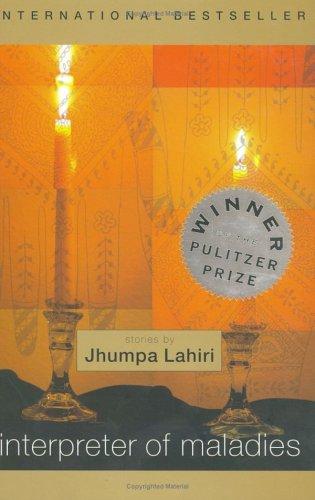
Author: Jhumpa Lahiri (b. 1967 London, raised Kingston Rhode Island, Barnard BA 1989 + BU MA 1993 / MA 1995 / PhD 1997, 2000 Pulitzer Prize Fiction + 2000 PEN/Hemingway + Princeton University Program in Creative Writing professor 2015-present + Italian-language author since 2015) Published: Houghton Mifflin June 2, 1999 · 198 pages · first Asian-American to win Pulitzer Fiction · 15M+ copies / 30+ languages / Penguin Modern Classics Goodreads: 4.17★ / 350K+ ratings · 9 stories: A Temporary Matter, When Mr. Pirzada Came to Dine, Interpreter of Maladies, A Real Durwan, Sexy, Mrs. Sen's, This Blessed House, The Treatment of Bibi Haldar, The Third and Final Continent Audiobook: Matilda Novak · HarperAudio · 7h 4m (canonical unabridged, 2000) · AudioFile Earphones Award · Sarita Choudhury Audible Studios 2019 6h 58m alternative Awards: 2000 Pulitzer Prize Fiction (beat Ha Jin Waiting 1999 NBA winner + Patricia Henley Hummingbird House) · 2000 PEN/Hemingway Award debut fiction · 1999 New Yorker Best Debut Fiction · 2000 Addison Metcalf Award (AAAL) · 1999 O. Henry Award for titular story · rare debut-story-collection Pulitzer win Adaptations: Mira Nair's 2006 The Namesake film (adjacent Lahiri work) Fox Searchlight w/ Kal Penn (Gogol Ganguli) + Irrfan Khan + Tabu + Zuleikha Robinson · budget $9.5M / $20.9M worldwide gross · 86% Rotten Tomatoes · Mrs. Sen's story had independent short-film adaptation circa 2010
Jhumpa Lahiri's Interpreter of Maladies is the 2000 Pulitzer Prize-winning debut story collection that made Lahiri the first Asian-American Fiction Pulitzer winner. Published June 2, 1999 by Houghton Mifflin, the 198-page collection arranges nine stories spanning Calcutta + Boston-Cambridge + Orissa + London 1964 — exploring first- and second-generation Bengali-American diaspora tensions. The April 2000 Pulitzer Prize announcement — beating Ha Jin's Waiting (1999 NBA + 2000 PEN/Faulkner winner) and Patricia Henley's Hummingbird House — was historic on two counts: Lahiri became the first Asian-American to win Pulitzer Fiction, and Interpreter became one of only a handful of debut story collections ever to win the prize (alongside James Alan McPherson's Elbow Room 1978 and Annie Proulx's Close Range 1999 NBCC adjacent). Sales reached 15M+ copies in 30+ languages, earning Penguin Modern Classics inclusion. The collection also won the 2000 PEN/Hemingway Award for debut fiction, the 1999 New Yorker Best Debut Fiction, and the titular story won the 1999 O. Henry Award. If you own the Kindle or EPUB copy and want to hear Matilda Novak's canonical 7h 4m HarperAudio narration while you commute, walk, or cook, use CastReader AI TTS to convert your copy to unabridged audio free →.
Why Interpreter of Maladies matters
The 2000 Pulitzer for a debut story collection was doubly historic. The Pulitzer Fiction prize has been awarded since 1918, and story collections rarely win — the committee's preference has traditionally favored novels. Interpreter joined a small group including Jean Stafford's Collected Stories (1970), James Alan McPherson's Elbow Room (1978), and Junot Díaz's This Is How You Lose Her (2013 Pulitzer Finalist only). Lahiri's win opened the door for subsequent story-collection Pulitzers: Adam Johnson's Fortune Smiles (2015 NBA) and structural precedent for Elizabeth Strout's Olive Kitteridge (2009 Pulitzer — 13 linked Maine stories). As the first Asian-American Fiction Pulitzer winner, Lahiri preceded Viet Thanh Nguyen's The Sympathizer (2016 Pulitzer) and sparked sustained publishing interest in Indian-American / South-Asian diaspora fiction.
The Nine Stories
Lahiri arranges nine stories spanning Calcutta + Boston/Cambridge + Orissa + London 1964 — exploring first- and second-generation Bengali-American diaspora tensions:
- A Temporary Matter — Boston couple Shoba and Shukumar use hourly power outages to share secrets after their stillborn son
- When Mr. Pirzada Came to Dine — 10-year-old Lilia watches Bangladesh 1971 war news with her father's Dhaka friend
- Interpreter of Maladies — titular O. Henry-winning story · Mr. Kapasi's Sun Temple tour-guide encounter with Indian-American Mrs. Das
- A Real Durwan — 64-year-old Calcutta stairwell sweeper Boori Ma's refugee narrative
- Sexy — Boston Miranda's affair with married Bengali executive Dev
- Mrs. Sen's — 11-year-old Eliot observes Mrs. Sen's fish-market driving-lesson immigrant isolation
- This Blessed House — Twinkle + Sanjeev's newlywed Christian-kitsch discovery
- The Treatment of Bibi Haldar — Calcutta courtyard's 29-year-old epileptic orphan's mysterious recovery
- The Third and Final Continent — Closing autobiographical story · 1964 London-to-Cambridge-MIT-library husband's first American year
TTS and Audiobook Comparison
| Option | Length | Narrator | Notes |
|---|---|---|---|
| Matilda Novak / HarperAudio | 7h 4m | Matilda Novak | Canonical unabridged · Earphones Award |
| Sarita Choudhury / Audible Studios | 6h 58m | Sarita Choudhury | 2019 alt (Bengali-American actress) |
| CastReader AI | ~7h 4m | neural TTS | Free, Kindle-copy instant alternative |
Lahiri's Literary Oeuvre
- Interpreter of Maladies (1999) — debut stories · 2000 Pulitzer
- The Namesake (2003) — novel · 2006 Mira Nair Fox Searchlight film Kal Penn
- Unaccustomed Earth (2008) — second collection · 2008 Frank O'Connor International Short Story Award winner
- The Lowland (2013) — novel · 2013 NBA Fiction Finalist + Man Booker Prize Shortlist
- In Other Words / In altre parole (2015-2016) — Italian-language memoir (Lahiri shift to Italian)
- Whereabouts / Dove mi trovo (2018 Italian / 2021 English) — Italian novel self-translated
- Translating Myself and Others (2022) — essay collection on translation
Bengali-American Diaspora Context
Lahiri's Calcutta-Cambridge diaspora novels map a distinct generational arc: her parents (Mallya "Tia" Lahiri + Amar Lahiri, Calcutta-to-Kingston Rhode Island 1968 academic immigration) represent the first-generation "immigrant-nostalgia" voice, while Lahiri herself represents the second-generation "American-native Bengali-heritage" voice. The collection's nine stories oscillate between these two registers — Mrs. Sen's isolation in the Cambridge coastal town voices first-generation longing, while Lilia's bi-hyphenated identity (American schoolgirl observing her father's Bangladesh-1971 grief) voices second-generation ambiguity. This oscillation became Lahiri's signature structural mode, continued in The Namesake (Ashoke-Ashima first-generation + Gogol-Sonia second-generation parallel structure) and Unaccustomed Earth (explicitly family-tree three-generation arcs).
Limitations and Honest Notes
- CastReader is desktop browser only: Works on Kindle Cloud Reader (read.amazon.com) in Chrome, Edge, Firefox
- Short-story collections work well: each 15-30 minute story fits commute/gym/walk sessions cleanly
- Not DRM bypass: CastReader reads what's visually rendered on screen
Try Interpreter of Maladies with CastReader
- Open your Kindle copy at read.amazon.com in Chrome, Edge, or Firefox
- Install CastReader extension or sync your copy via paste
- Pick your voice — any neural-TTS voice handles Lahiri's lucid-restrained register
- Press play — listen story-by-story across 3-4 sessions
Start listening to Interpreter of Maladies free →
Related Reading
- The Sympathizer (Viet Thanh Nguyen) — TTS & Audiobook Guide — 2016 Pulitzer · Asian-American canon
- Pachinko (Min Jin Lee) — TTS & Audiobook Guide — Korean-Japanese diaspora
- Olive Kitteridge (Elizabeth Strout) — TTS & Audiobook Guide — 2009 Pulitzer linked-story collection
- Gilead (Marilynne Robinson) — TTS & Audiobook Guide — 2005 Pulitzer
- Americanah (Chimamanda Ngozi Adichie) — TTS & Audiobook Guide — 2013 NBCC diaspora fiction
