Things Fall Apart Text to Speech: Free Audio for Chinua Achebe's Okonkwo Igbo Colonial Nigeria African Canonical Masterpiece
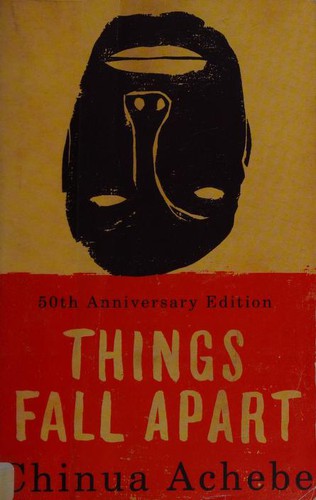
Author: Chinua Achebe (1930-2013, Ogidi-Anambra-Nigeria-born, 5 novels + essays + poetry + children's books, Man Booker International Prize 2007 + Nigerian National Merit Award 1979 + Father of modern African literature consensus-assessment) Published: William Heinemann (London) June 17, 1958 · Fawcett US paperback 1959 · Anchor/Doubleday US hardcover 1994 · inaugural volume Heinemann African Writers Series 1962 Pages: 209 · Goodreads: 3.74★ / 400K ratings Audiobook: Peter Francis James · Recorded Books · 6h 45m (canonical) · Raphael Amahl Khouri · Recorded Books · 7h 2m alt · Chinua Achebe BBC Radio 1959 · partial-author-recording Awards: Man Booker International Prize 2007 (Achebe career-achievement — cited Things Fall Apart foundationally) · 1975 Margaret Wrong Prize · 1959 Nigerian National Trophy for Literature · 1979 Nigerian National Merit Award · BBC 100 Novels That Shaped Our World · Time 100 Best English-Language Novels 1923-2005 · Guardian 100 Greatest Novels · Norton Anthology World Literature canonical · 20M+ copies global across 50+ language translations — most-translated African novel in history · AP English Literature + IB-HL World-Literature + African-literature-canon-required Adaptations: Peter Badejo 1971 Bullfrog in the Sun German-Nigerian film (Hans Jürgen Pohland director, combined Things Fall Apart + No Longer at Ease) w/ Johnny Sekka · 1987 Nigerian Television Authority 13-part TV miniseries w/ Pete Edochie (Okonkwo — definitive-Nigerian-TV-portrayal) + Justus Esiri (Obierika) + Nkem Owoh · 2004 Biyi Bandele directorial option (unfilmed) · 2008 Charles Novia project (unfilmed) · 2012 Chinua Achebe Foundation option (unfilmed)
Chinua Achebe's Things Fall Apart is the foundational text of modern African literature and the most-translated African novel in history. Published by William Heinemann on June 17, 1958, the 209-page novel has sold 20M+ copies across 50+ language translations. It launched Heinemann's African Writers Series as its inaugural #1 volume in 1962, catalyzed post-colonial African literary theory, and is required reading in AP English Literature + IB-HL World Literature + every major university's African Studies curriculum globally. Achebe's 2007 Man Booker International Prize career-achievement-award explicitly cited Things Fall Apart as foundational. Wole Soyinka, Nigerian Nobel Laureate 1986, has called Achebe 'the father of modern African literature.' If you own the Kindle or EPUB copy and want to hear Peter Francis James's canonical 6h 45m narration while you commute, walk, or cook, use CastReader AI TTS to convert your copy to unabridged audio free →.
The novel follows Okonkwo — a self-made Umuofia village wrestler, yam-farmer, and three-wives-household-head in 1890s southeastern Nigeria — whose life is defined by his terror of becoming his failed titled-man father Unoka. Part 1 (Chapters 1-13) establishes Okonkwo's rise in Umuofia: his defeat of the unbeaten wrestler Amalinze the Cat, his three wives (Nwoye's mother, Ekwefi, and Ojiugo), his son Nwoye (whom he judges insufficiently masculine), his daughter Ezinma (his favorite), and his adoption of Ikemefuna — a boy hostage given to Umuofia as tribute from the neighboring village of Mbaino. When the Oracle decrees Ikemefuna's death, Okonkwo participates in the killing — machete-striking the boy himself to avoid appearing weak, shattering the normative-Igbo ethics that forbid a man to kill his own adopted-son. Part 2 (Chapters 14-19) covers Okonkwo's seven-year exile to his mother's homeland of Mbanta after his gun accidentally discharges at the funeral of Ezeudu, killing a young boy — automatic-exile for accidental-feminine-offense. During Mbanta exile, Okonkwo learns that British-Anglican missionaries have arrived in Umuofia and Mbanta, converting village outcasts and beginning to undermine Igbo traditional religion. Okonkwo's son Nwoye converts to Christianity — a rupture Okonkwo experiences as personal-obliteration. Part 3 (Chapters 20-25) covers Okonkwo's return to Umuofia to find his village permanently transformed — a British District Commissioner, an Anglican church, a trading post, a colonial court. Okonkwo mobilizes traditional resistance, but village-elders decline to wage war. When British-summoned messengers arrive, Okonkwo kills one with his machete and flees into the forest. The novel's final scene: Okonkwo commits suicide — the ultimate Igbo abomination, requiring burial by strangers and abandonment by kinsmen — and the British District Commissioner notes that 'the story of this man who had killed a messenger and hanged himself would make interesting reading' — 'a reasonable paragraph, at any rate' — in his book The Pacification of the Primitive Tribes of the Lower Niger. Achebe's final irony collapses the novel into a sentence in a colonial administrator's counter-narrative.
Achebe wrote Things Fall Apart while working as Talks Producer at the Nigerian Broadcasting Service (NBS) in Lagos 1954-1958. The manuscript was rejected by multiple British publishers before Alan Hill at William Heinemann accepted it. Its 1958 publication preceded Nigerian independence by two years (October 1, 1960). The novel was Achebe's response to Joseph Conrad's Heart of Darkness (1899) and Joyce Cary's Mister Johnson (1939), which Achebe experienced in university as demeaning of African humanity.
Why 6h 45m Matters
Things Fall Apart at 209 pages and 6h 45m is the most-accessible-canonical-African novel — shorter than any Hemingway work but carrying the ideological weight of a civilizational indictment. Peter Francis James's canonical Recorded Books edition captures the Igbo-English proverbial register with West-African-cadence authenticity. CastReader's AI narration is excellent for classroom use and re-read; Peter Francis James is strongly recommended for first-listen Igbo-proverb-nuance.
TTS and Audiobook Comparison
| Option | Length | Narrator | Notes |
|---|---|---|---|
| Peter Francis James / Recorded Books | 6h 45m | Peter Francis James | Canonical recommended |
| Raphael Amahl Khouri / Recorded Books | 7h 2m | Raphael Amahl Khouri | Alternative |
| Chinua Achebe / BBC Radio 1959 | partial | author-narration | Historical rarity |
| CastReader AI | ~6h 45m | neural TTS | Free, classroom-ready |
The African Writers Series Legacy
Heinemann's African Writers Series (AWS), founded 1962 with Things Fall Apart as its inaugural #1 volume, eventually published 275+ volumes across 1962-2003 from African writers including Ngũgĩ wa Thiong'o (Kenya — 13 AWS volumes), Ayi Kwei Armah (Ghana), Bessie Head (Botswana-South Africa), Nadine Gordimer (South Africa — 1991 Nobel), Wole Soyinka (Nigeria — 1986 Nobel), Ama Ata Aidoo (Ghana), Alex La Guma (South Africa), Buchi Emecheta (Nigeria), Camara Laye (Guinea), Ousmane Sembène (Senegal), Okot p'Bitek (Uganda), Christopher Okigbo (Nigeria). Achebe served as founding editor 1962-1972. AWS made African-authored English-language fiction globally accessible and catalyzed post-colonial literature's entry into Western university curricula.
Achebe's African Trilogy
- Things Fall Apart (1958) — pre-colonial/early-colonial Umuofia
- No Longer at Ease (1960) — Okonkwo's grandson Obi Okonkwo in 1950s Lagos colonial-civil-service bribery
- Arrow of God (1964) — 1920s Ezeulu chief-priest-of-Ulu vs British colonial administration
- A Man of the People (1966) — 1960s post-independence political corruption (not trilogy but consecutive)
- Anthills of the Savannah (1987) — Booker shortlist, post-Biafran-War Nigerian dictatorship
- There Was a Country: A Personal History of Biafra (2012) — posthumous publication-year Biafran-War memoir
- Hopes and Impediments (1988) — essays including 'An Image of Africa: Racism in Conrad's Heart of Darkness'
Context and Impact
Things Fall Apart is the foundational post-colonial African novel. Its 1958 publication — two years before Nigerian independence — initiated the modern African literary tradition. Achebe's 1975 Amherst Chancellor's Lecture 'An Image of Africa: Racism in Conrad's Heart of Darkness' became foundational to post-colonial theory. Pete Edochie's 1987 Nigerian Television Authority miniseries portrayal of Okonkwo is iconic to millions of Nigerian viewers. For AP English Literature, IB-HL World Literature, college African Studies, and any reader interested in pre-colonial African civilization and British colonial history, Things Fall Apart is essential.
Next Steps
Own a Kindle or EPUB copy of Things Fall Apart? Convert it to free unabridged audio with CastReader →. CastReader reads what's rendered on screen with neural TTS voices — zero cost, zero limits, zero subscription.
Looking for more canonical literary fiction audio guides? See our Kindle Text-to-Speech master guide, Audible alternative, and turn any ebook into an audiobook roundups.
