Sapiens Audiobook & Text to Speech Guide (2026) — Yuval Noah Harari's Obama-Gates-Zuckerberg-Endorsed Cognitive-Revolution Big-History Phenomenon
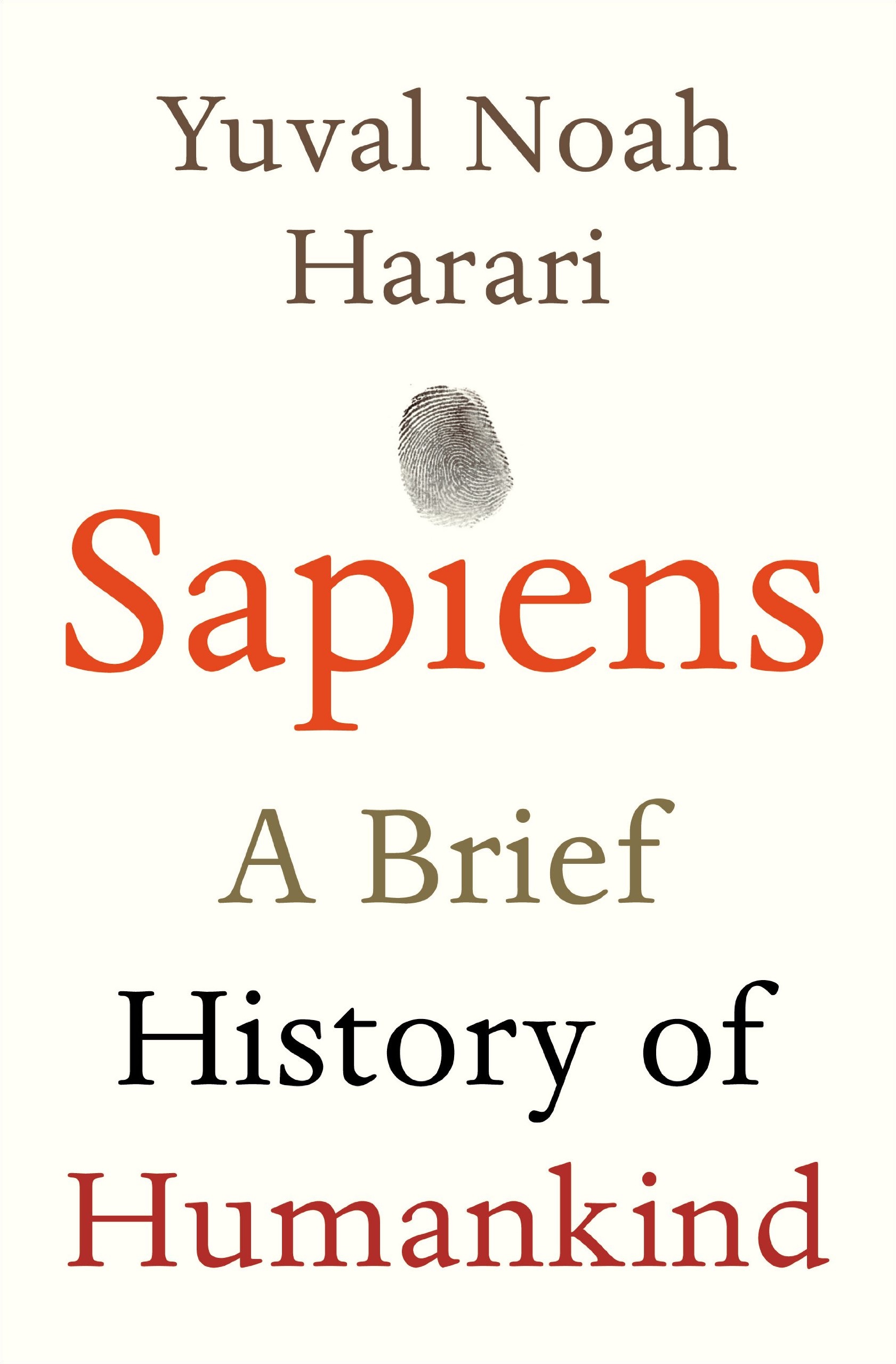
Sapiens: A Brief History of Humankind — Yuval Noah Harari
First published: 2011 (Hebrew) / February 2014 (English, Harper)
Pages: 512 (hardcover)
Goodreads: 4.33★ (1.29M+ ratings) · view
Audiobook runtime: ~15h 17m · Derek Perkins / Harper Audio canonical production
Commercial scale: 25M+ global sales · 65+ language translations · decade-long NYT / international bestseller
Cultural endorsement: Obama 2017 reading list · Bill Gates · Mark Zuckerberg's 'A Year of Books' · global university-curriculum adoption
The defining 2010s big-history synthesis — 25+ million copies across 65+ languages, the canonical Derek Perkins Harper Audio production, and the single non-fiction book most commonly cited as 'the book that changed how I see humanity.' Skip the Libby wait with Kindle + free CastReader AI TTS →
Sapiens is Yuval Noah Harari's 2011 (Hebrew) / 2014 (English) big-history masterwork — the 512-page synthesis tracing Homo sapiens from the Cognitive Revolution ~70,000 years ago through the Agricultural Revolution ~12,000 years ago, the unification of humankind through global empires and monetary systems, and the Scientific Revolution ~500 years ago culminating in the present bioengineering / AI threshold. Harari's central thesis — that humans dominate Earth through unique ability to believe in shared fictions (gods, nations, money, corporations, human rights) enabling cooperation at unlimited scale — synthesizes anthropology, evolutionary biology, economics, political science, and philosophy into a single accessible narrative that has sold 25+ million copies across 65+ languages. The book earned reading-list endorsement from Barack Obama, Bill Gates, Mark Zuckerberg's 'A Year of Books,' and countless academic and corporate reading clubs; the 4.33★ Goodreads rating across 1,287,000+ ratings reflects sustained critical and reader esteem. Harari's follow-up volumes (Homo Deus 2016, 21 Lessons 2018, Nexus 2024) built on Sapiens's architecture but the original remains the flagship work and the universal entry point into contemporary big-history thinking. At 15h 17m with Derek Perkins's Harper Audio canonical production, Sapiens is the flagship 2010s non-fiction audiobook — universally recommended for listeners entering big-history / anthropology / civilizational-thinking domains.
This guide covers the 15h 17m runtime, the Derek Perkins canonical production, the four-part structure, and every free / paid path.
Why 15h 17m Matters for Big-History Non-Fiction
Big-history and civilizational-synthesis runtime benchmark.
| Title | Runtime | Year | Goodreads rating |
|---|---|---|---|
| Sapiens (Harari) — this book | 15h 17m | 2014 | 4.33★ |
| Homo Deus (Harari) | 14h 54m | 2016 | 4.19★ |
| 21 Lessons for the 21st Century (Harari) | 11h 41m | 2018 | 4.14★ |
| Nexus (Harari) | 16h 52m | 2024 | 4.31★ |
| Guns, Germs, and Steel (Diamond) | 16h 20m | 1997 | 4.06★ |
| The Better Angels of Our Nature (Pinker) | 36h 27m | 2011 | 4.36★ |
| A Short History of Nearly Everything (Bryson) | 18h 16m | 2003 | 4.23★ |
Sapiens sits at the approachable end of the big-history spectrum — shorter than Pinker's Better Angels (36h) and longer than a standard non-fiction title, but paced for general-reader accessibility. At 15h 17m, the book reads comfortably across 9-13 days of commute listening or two weekends at 1.5x.
Three Listening Modes
Mode 1 — Canonical Audio (Derek Perkins Harper Audio 2014). $14.95 Audible credit or library-borrow via Libby; Audible Plus subscribers check rotating availability. Perkins's calm academic voice and British-English precision make this the industry-standard Sapiens production.
Mode 2 — AI TTS via CastReader. Free, unlimited re-listens, adjustable speed, pronunciation overrides for Homo sapiens / Neanderthal / Göbekli Tepe / Çatalhöyük / Harari-specific terminology. Particularly valuable for chapter-specific re-reads and academic-citation re-engagement. See CastReader for Kindle.
Mode 3 — Libby / Hoopla library borrow. Libby 1-3 week wait (lower than novel queues). Hoopla instant-lend where available. The library route trades wait time for zero-dollar cost.
The Derek Perkins Canonical Production
Harper Audio's 2014 Derek Perkins recording is the industry-consensus definitive Sapiens production. Derek Perkins (British-American narrator, two-time Audie Award winner) brings calm academic-register delivery, meticulous pronunciation on anthropological and geographical terminology, and a synthesizing cadence that matches Harari's paragraph rhythms. Perkins has narrated 500+ audiobooks with particular strength in history, biography, philosophy, and science non-fiction; his Sapiens reading is widely considered the strongest in his catalog.
The production handles the Hebrew-to-English translation polish with Perkins's restraint — Harari's original Kol Toldot Ha-Enoshut was published in Hebrew 2011 before John Purcell's English translation for Harper 2014. No alternative production currently competes. For first-listeners: Harper Audio 2014 is the standard commercial recommendation. Perkins also narrates Harari's subsequent Homo Deus and 21 Lessons, enabling seamless Harari-canon continuity for listeners who commit to the full Harari sequence.
The Four-Part Big-History Architecture
Part 1 — The Cognitive Revolution (~70,000 years ago). Homo sapiens coexisted with Homo neanderthalensis, Homo erectus, Homo floresiensis, and other human species. A genetic or neurological shift ~70,000 years ago enabled abstract-fictional thought — the ability to speak about things that don't exist (gods, spirits, tribal origin myths, future plans). This capacity for shared fiction enabled cooperation beyond the ~150-person Dunbar-number limit, allowing Homo sapiens to coordinate in large groups and systematically extirpate other human species. The Cognitive Revolution is Harari's foundational thesis: fictional cooperation is the human superpower.
Part 2 — The Agricultural Revolution (~12,000 years ago). Wheat, rice, corn, and other staple crops were domesticated in the Fertile Crescent, Yangtze Valley, and Mesoamerica. Harari provocatively calls this 'history's biggest fraud' because individual human wellbeing decreased with settled farming: longer work hours, monotonous diet, new diseases from animal proximity, rigid hierarchies replacing hunter-gatherer egalitarianism. But the Agricultural Revolution enabled population density, specialized labor, and surplus — the preconditions for civilization. Harari uses Göbekli Tepe (the 11,600-year-old ceremonial site in Turkey) to argue religion may have preceded agriculture rather than following it.
Part 3 — The Unification of Humankind. Global empires (Persian, Roman, Chinese, Arab, British, Soviet), monetary systems (Sumerian silver weights, Lydian coins, credit-paper, fiat currency), and universal religions (Buddhism, Christianity, Islam, Communism) progressively bound humanity into shared narratives enabling planet-scale cooperation. Harari frames money as the universal trust-mechanism — a fiction believed by all humans enabling coordination across strangers, languages, and cultures. Universal ideologies similarly enabled multi-billion-person cooperation.
Part 4 — The Scientific Revolution (~500 years ago). European elites ~1500 CE made the unusual psychological move of acknowledging ignorance — 'we don't know, but we can find out.' This ignorance-acknowledgment combined with capitalism (future-oriented credit enabling investment), industrial production (fossil-fuel-powered manufacturing), and empire-backed global trade to generate the modern world's unprecedented wealth and technological acceleration. The book closes on the bioengineering / AI / cyborg-merger threshold — Harari's speculation that Homo sapiens may end as a biological species within centuries, replaced by designed or digital successors.
Why Sapiens Defines 2010s Big-History Synthesis
Harari's February 2014 English publication transformed academic big-history thinking from specialist domain to general-reader phenomenon. The book's foundational achievements:
Fictional-cooperation thesis. Harari's central argument — that shared belief in abstractions (gods, nations, money, corporations, human rights) enables uniquely human large-scale cooperation — provides a single explanatory frame for human dominance, civilizational variety, and modern institutional architecture. The thesis has generated extensive academic debate (The Dawn of Everything by David Graeber & David Wengrow 2021 offers the major counter-narrative) and widespread popular adoption.
Agricultural-Revolution provocation. Harari's framing of wheat domestication as 'history's biggest fraud' challenged the progressive narrative of civilizational advance and generated significant scholarly response. The argument that individual wellbeing decreased while civilizational scale increased reframes standard history curricula.
Bioengineering-as-species-ending speculation. The closing chapters position current biotech, AI, and cyborg development as potentially ending Homo sapiens as a biological species — a framing that anticipated post-2020 AI-alignment discourse and contemporary transhumanist debate.
Accessible-synthesis voice. Harari's characteristic 'perhaps most importantly' pivot structure, rhythmic paragraphing, and wit translate dense anthropological / evolutionary-biology / economic-history material into single-sitting-readable prose. The voice generated three sequel volumes (Homo Deus, 21 Lessons, Nexus) and spawned countless imitators in the post-2014 popular-science / big-history market.
The Obama-Gates-Zuckerberg Reading-List Phenomenon
Barack Obama 2017 summer reading list. Obama included Sapiens among his recommended books, calling it 'provocative' and citing Harari's influence on his post-presidency thinking about technology and humanity.
Bill Gates. Gates reviewed Sapiens on his GatesNotes blog, calling it 'thought-provoking' and recommending it as introductory big-history reading. Gates has also reviewed Homo Deus and 21 Lessons.
Mark Zuckerberg 2015 'A Year of Books.' Zuckerberg's annual public reading list began in 2015 with Sapiens as one of the twelve selections — a selection widely credited with accelerating the book's English-language sales momentum.
Global academic adoption. Sapiens is taught in introductory anthropology, big-history, Western civilization, and public-intellectual-discourse courses at universities worldwide — including Harvard, Stanford, Oxford, Cambridge, and countless regional institutions.
Corporate reading clubs. Technology, consulting, and finance firms commonly use Sapiens as shared-reading for new-hire orientation and leadership development.
The Obama-Gates-Zuckerberg endorsement cluster positioned Sapiens as the 'educated-generalist must-read' of the mid-2010s, generating the international-bestseller momentum that accumulated 25+ million copies and 65+ language translations.
Free and Paid Listening Paths (April 2026)
Free paths:
- Libby — Harper Audio edition via U.S. library card, 1-3 week waits
- Hoopla — instant-lend (no wait) where available
- Audible Plus — occasional rotating Sapiens
- Spotify Premium — fits within 15h monthly audiobook allocation
- CastReader — free AI TTS on any Kindle edition
Paid paths:
- Audible Premium — 1 credit ($14.95) for Harper Audio or purchase $25-30
- Kindle ebook — $12-15 (no public-domain option, still under copyright)
- Physical — Harper paperback $12-18, hardcover $20-30
Why Kindle + CastReader Wins for Sapiens
For listeners prioritizing flexible chapter-specific re-engagement over Perkins's canonical polish, Kindle + CastReader free AI TTS is the optimal path:
- Unlimited re-listens — no credit cost per engagement, critical for book-club-preparation or academic-citation re-reads
- Adjustable pace — particularly valuable through dense evolutionary-biology or economic-history passages
- Pronunciation overrides — configure Homo sapiens, Neanderthal, Denisovan, Göbekli Tepe, Çatalhöyük, Hammurabi, Gilgamesh, Qin Shi Huang, Ashoka, Augustus, Muhammad, Genghis Khan, Darwin, mitochondrial Eve, Y-chromosomal Adam for consistent AI narration
- Chapter-specific bookmarking — listeners commonly re-engage Part 1 Chapter 2 (Cognitive Revolution), Part 2 Chapter 5 (Agricultural Revolution fraud), Part 4 Chapter 17 (capitalism), Part 4 Chapter 20 (bioengineering conclusion)
- Paragraph highlighting — supports concentrated study of Harari's argument structure
For listeners wanting Perkins's canonical polish on first listen, use Audible or Libby; then switch to CastReader for re-listens and chapter-specific study.
Sapiens and the Big-History Canon
The 2000s-2010s big-history / popular-synthesis wave produced several canonical works alongside Sapiens:
- Guns, Germs, and Steel (Jared Diamond, 1997) — environmental-geographical-determinism predecessor
- A Short History of Nearly Everything (Bill Bryson, 2003) — popular-science big-history
- The Better Angels of Our Nature (Steven Pinker, 2011) — violence-decline historical analysis
- Origin Story (David Christian, 2018) — big-history from the Big Bang
- The Dawn of Everything (Graeber & Wengrow, 2021) — anthropological counter-narrative
- Homo Deus / 21 Lessons / Nexus (Harari, 2016 / 2018 / 2024) — Harari's own sequels
For listeners building the big-history canon: Sapiens → Guns, Germs, and Steel → The Dawn of Everything forms a three-book thesis-antithesis-synthesis sequence worth reading in order. The combination reveals both the power and limits of single-explanatory-frame big-history narratives.
Related Reading
For listeners building the general non-fiction and big-history canon, these CastReader guides pair naturally with Sapiens:
- The Body Keeps the Score (Bessel van der Kolk) — TTS & Audiobook Guide · Sean Pratt 16h 17m, trauma-science decade-defining non-fiction peer
- The Let Them Theory (Mel Robbins) — TTS & Audiobook Guide · Mel Robbins self-narrated 9h 48m, 2024-2025 self-help phenomenon
- The Anxious Generation (Jonathan Haidt) — TTS & Audiobook Guide · Sean Pratt 10h 7m, 2024 social-psychology bestseller
- The Alchemist (Paulo Coelho) — TTS & Audiobook Guide · Jeremy Irons 4h / Edward Herrmann alt, 65M-copy philosophical-fable peer
- 1984 (George Orwell) — TTS & Audiobook Guide · Simon Prebble Blackstone 11h 22m, civilizational-warning peer
Limitations and Honest Notes
- Still under copyright — first published 2011 / 2014; Harari remains alive and actively publishing; copyright protection continues indefinitely. No free public-domain audio; all legal audio requires Audible/Libby/Hoopla routes.
- Argument controversy — many Harari claims (especially the Agricultural Revolution 'fraud' framing and the Cognitive Revolution sharp-transition thesis) have generated significant scholarly pushback. The Dawn of Everything (Graeber & Wengrow 2021) offers the major counter-narrative. Readers should engage Sapiens as provocative synthesis, not settled academic consensus.
- Length commitment — at 15h 17m, Sapiens is a 9-13 day commute-listening commitment; plan accordingly.
- Density variance — the Cognitive Revolution and Scientific Revolution sections are more widely-accessible; the middle unification-of-humankind section covers more granular imperial and economic history and benefits from re-listening.
- Post-publication updates — Sapiens was written before 2014 and predates subsequent AI / bioengineering / climate developments; readers may want to pair with Nexus (2024) for Harari's current thinking on the information-network frame.
Related: Listen to Kindle | Audible Alternative Free | Turn Ebook into Audiobook | Send to Phone | Kindle Audiobook Free
