The House of the Spirits Text to Speech: Free Audio for Isabel Allende's Magical-Realist Chilean Saga
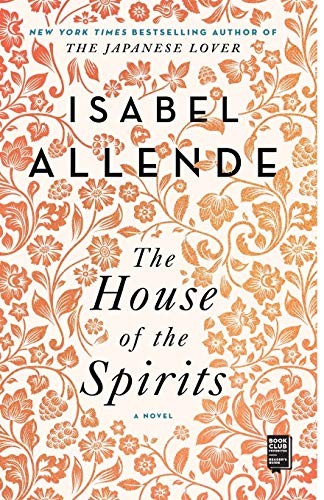
Author: Isabel Allende (26 books, most-read Spanish-language author alive, 77M copies career, Chilean-American, niece of President Salvador Allende) Published: October 1982 (Plaza & Janés, Spanish) · 1985 (Alfred A. Knopf, Magda Bogin English translation) Pages: 448 · Goodreads: 4.17★ / 260K ratings Audiobook: Blair Brown · HarperAudio · 19h 16m (English) · Marisol Ramirez · HarperAudio · 18h 51m (Spanish) Awards: 1983 Chilean Premio del Ministerio de Cultura · 1983 Grand Prix d'Évasion France · 1984 Panorama Literario Paperback of the Year · 1986 Quality Paperback Book Club New Voice · 7M+ copies global · 40+ language translations · Latin-American literary-canon text · University-course staple for 40 years Adaptations: 1993 Warner Bros/Miramax film (Bille August directing, Meryl Streep + Jeremy Irons + Glenn Close + Winona Ryder + Antonio Banderas + Vanessa Redgrave + Maria Conchita Alonso, 140 minutes, $6.3M US / $20M+ Europe) · 2009 Royal Dramatic Theatre Sweden stage adaptation · 2017 Guthrie Theater Minneapolis stage adaptation (Caridad Svich)
Isabel Allende's The House of the Spirits is the foundational Chilean magical-realist family saga. Published October 1982 in Spanish and selling 7 million copies across 40 languages, its 1993 Warner Bros/Miramax film adaptation with Meryl Streep + Jeremy Irons + Glenn Close + Winona Ryder + Antonio Banderas cemented it as canonical Latin American literature. If you own the Kindle or EPUB copy and want to hear the canonical 19-hour narration while you commute, garden, or cook, use CastReader AI TTS to convert your copy to unabridged audio for free →.
The novel opens with young Clara del Valle writing in her first green notebook: "Barrabás came to us by sea." Over four generations the Trueba family saga unfolds in an unnamed Latin American country modeled on Chile. Severo del Valle (Clara's father, a liberal politician) marries Nívea (who agitates for women's suffrage). Their daughter Rosa the Beautiful (green-haired, engaged to Esteban Trueba) dies of arsenic poisoning intended for Severo. Rosa's sister Clara falls mute for nine years, grows into a clairvoyant who predicts futures, communes with spirits, and eventually marries Esteban Trueba after his brutal rise as patrón of Tres Marías hacienda. Their daughter Blanca falls in love with the peasant-socialist Pedro Tercero García; Esteban disowns her when she becomes pregnant outside marriage. Blanca's daughter Alba grows up in the big house on the corner during the 1970s, falls in love with revolutionary Miguel, and in September 1973 — after the military coup overthrows the socialist President — is detained, tortured, and raped by Colonel Esteban García (Esteban Trueba's illegitimate grandson, conceived when Esteban raped the peasant girl Pancha García in chapter 2). Tránsito Soto, a former brothel prostitute who Esteban once helped, uses her network of generals to rescue Alba. The novel ends with Alba pregnant, writing the family's story from her grandfather Esteban's notes — which we realize we have just read.
Allende began writing the novel January 1981 as a letter to her 99-year-old grandfather Agustín Llona dying in Santiago. She wrote in Venezuelan exile after Isabel and her family fled Chile following her uncle Salvador Allende's CIA-backed overthrow by Augusto Pinochet September 11, 1973. The character Severo del Valle mirrors Salvador Allende's political career; the "Poet" who appears briefly is Pablo Neruda (Allende's family friend, who died twelve days after the coup); the coup chapters are autobiographical witness.
Why 19 Hours 16 Minutes Matters
The House of the Spirits is narratively dense because Allende uses three interwoven points of view: Clara's first-person green-notebook entries, Alba's first-person framing (she is "writing the book we have read"), and Esteban Trueba's first-person flashbacks spoken in the house's empty rooms. The canonical HarperAudio edition by Blair Brown handles the three voices with subtle shifts; the Spanish Marisol Ramirez edition carries Allende's rhythmic Latin-American cadence. CastReader's single-narrator consistency is cleaner for first-pass reading but trades the tri-voice texture for uniform clarity.
| Book | Audiobook Length | Goodreads | Why Listeners Compare |
|---|---|---|---|
| The House of the Spirits · Allende | 19h 16m | 4.17★ / 260K | Chilean magical-realism family saga |
| One Hundred Years of Solitude · García Márquez | 19h 59m | 4.11★ / 1.0M | Colombian magical-realism foundational text |
| Like Water for Chocolate · Esquivel | 5h 51m | 3.95★ / 250K | Mexican magical realism + kitchen-novel |
| Daughter of Fortune · Allende | 16h 50m | 3.93★ / 130K | Allende's California Gold Rush prequel-companion |
| A Long Petal of the Sea · Allende | 13h 8m | 4.05★ / 100K | Spanish Civil War Chile refugees 2019 |
What Happens in Chapter 12 (The Coup)
The September 1973 coup sequence runs roughly 1h 30m of audio. Allende narrates without naming Pinochet or Salvador Allende — "the President" is in La Moneda palace, "the Poet" is Pablo Neruda, "the military men" storm the capital. Esteban Trueba initially celebrates: he believed socialism would take his hacienda. Jaime Trueba (the good-doctor son, trained in socialist medicine) is killed trying to warn the President. Pedro Tercero García escapes to exile after years organizing Tres Marías peasants. Esteban watches Chile transform from constitutional democracy to military dictatorship in 72 hours and realizes his conservative allies have taken everything too far. The pacing is slow and accumulative — Allende refuses sensationalism. Listen at 1× and do not skip.
What Happens in Chapter 14 (Alba's Detention)
The detention sequence is the novel's climax and the reason it appears on some content-warning lists. Colonel Esteban García — son of Esteban Trueba's rape of the peasant Pancha García in chapter 2 — detains Alba. He recognizes her as the granddaughter of the man who raped his grandmother. His interrogation is waterboarding, sexual assault, and psychological torture across weeks in an unnamed detention center. Tránsito Soto (the prostitute Esteban helped in chapter 3, who now runs "El Cristóbal Colón" brothel frequented by generals) uses her political network to secure Alba's release. Alba emerges pregnant — uncertain whether the father is her boyfriend Miguel or Colonel García. The book closes with Alba deciding to raise the child as "hers" regardless, writing the family story from her grandfather's green notebooks. The multigenerational violence pattern — Esteban Trueba rape → Esteban García existence → Alba detention — is Allende's most devastating structural argument.
Classroom & Book-Club Use
Standard on AP Spanish Literature, Latin-American Studies 200-level, and World Literature curricula since the 1990s. Common pairings: One Hundred Years of Solitude (García Márquez — magical-realism + multi-generational saga template), Like Water for Chocolate (Esquivel — magical realism + Mexican kitchen), In the Time of the Butterflies (Alvarez — Dominican Republic Mirabal sisters political-resistance family saga), Beloved (Morrison — magical realism + trauma testimony). Book-club discussion guides focus on: (1) Allende's use of magical realism to witness political violence, (2) the Esteban Trueba rape → Esteban García existence → Alba detention generational-violence pattern, (3) women's interior life (Clara's notebooks, Alba's testimony) vs. men's exterior politics, (4) the unnamed country (Chile) and the coup depicted without Pinochet's name, (5) Allende's relationship to her uncle Salvador Allende and her 15-year Venezuelan exile.
Pairs Well With
- Possession Text to Speech — 1990 Booker Prize winner dual-timeline literary mystery
- Shadow of the Wind Text to Speech — post-war Barcelona gothic literary mystery
- Elegance of the Hedgehog Text to Speech — French philosophical apartment-building novel
- Guernsey Literary Society Text to Speech — WWII Channel Islands epistolary literary friendship
- A Gentleman in Moscow Text to Speech — Russian literary historical novel
How to Listen on CastReader
- Open the Kindle/EPUB copy you already own (Amazon purchase or library-borrowed DRM-free)
- Upload to CastReader at castreader.ai/listen-to-kindle — the in-browser TTS reads instantly with no account
- Select a voice — CastReader offers 20+ AI voices; Bella or Adam work well for magical-realism pacing; use a warmer voice for Clara's notebook entries and a firmer voice for Esteban's flashback testimony
- Adjust speed — 1× for the magical-realism scenes and chapters 12-14 (coup/detention) where pacing carries weight; 1.5× for the four-generation time-jumps
- Bookmark chapter 1 (Clara/Rosa/Esteban), chapter 2 (Esteban at Tres Marías), chapter 12 (the coup), and chapter 14 (Alba's detention) — these are the book's structural peaks and benefit from re-listen
Why This Works for The House of the Spirits Specifically
Allende's prose in Magda Bogin's canonical English translation is clean, paragraph-driven, emotionally clear — no Mitchell-or-Byatt structural experimentation, no Zafón gothic ornamentation. Spanish-language rhythm survives into the English with clarity. This is ideal TTS territory: AI narration doesn't struggle with tangled grammar, and Spanish names (del Valle, Trueba, Férula, Nívea, Pedro Tercero García, Tránsito Soto, Barrabás) read cleanly. Seven million readers across 40 languages have returned to the audiobook repeatedly since 1985 — the text rewards second and third listens as Alba's framing narration reveals new dimensions each pass. CastReader makes that repeat-listen frictionless.
Start converting your Kindle copy →
About CastReader — CastReader is a free in-browser AI TTS built for Kindle/EPUB owners who want canonical audiobook-quality listening without Audible subscription lock-in. Upload the copy you own; listen immediately with 20+ voices, 0.5×–3× speed, Chrome/Safari/mobile support. Learn more →
