Lolita Text to Speech: Free Audio for Vladimir Nabokov's Prose-Stylist Controversial Masterwork
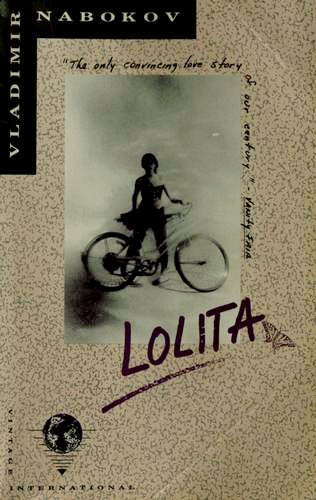
Author: Vladimir Nabokov (1899-1977, born Saint Petersburg Russia, fled Bolshevik Revolution 1917 to Crimea, Cambridge Trinity College 1919-1922, Berlin-Paris émigré 1922-1940, Cornell + Wellesley + Stanford + Harvard faculty 1941-1958, Montreux Switzerland 1961-1977, 17 Russian-language novels 1926-1938 + 8 English-language novels 1941-1974 + lepidopterist world-class butterfly collector with 20+ species named for him) Published: September 15, 1955 (Olympia Press Paris · Putnam US 1958 · Weidenfeld & Nicolson UK 1959) Pages: 336 · Goodreads: 3.91★ / 900K ratings Audiobook: Jeremy Irons · Random House Audio 2005 · 11h 33m (canonical, Adrian-Lyne-1997-film-Humbert) · Christopher Hurt · Blackstone 1994 · 12h 20m (alt) · Vladimir Nabokov · 1966 Voice of America 20-minute excerpt reading Awards: Modern Library 100 Best Novels 20th Century #4 · Time 100 Best English-Language Novels 1923-2005 · Le Monde 100 Books of the Century #27 · BBC 100 Novels That Shaped Our World · Harold Bloom Western Canon · #1 NYT bestseller 1958 (US Putnam publication — 3-week rise from publication) · Observer 100 Greatest Novels · Great American Read PBS 2018 Top 100 · AP English Literature + Nabokov-survey + prose-stylist canonical · 60M+ copies global · 40+ language translations · Nabokov Best Adapted Screenplay Oscar nomination 1963 (for his 1962 Kubrick screenplay adaptation) Adaptations: 1962 MGM film (Stanley Kubrick directing, Vladimir Nabokov screenplay — Nabokov Best Adapted Screenplay Oscar nomination, James Mason as Humbert Humbert + Sue Lyon as Lolita (age 14) + Shelley Winters as Charlotte Haze + Peter Sellers as Clare Quilty (expanded comedic role), 152 minutes, $2M budget / $9.25M box office, Sue Lyon Golden Globe Best Newcomer) · 1997 Showtime/Pathé film (Adrian Lyne directing, Stephen Schiff screenplay, Jeremy Irons as Humbert + Dominique Swain as Lolita (age 15) + Melanie Griffith as Charlotte + Frank Langella as Clare Quilty + Suzanne Shepherd + Keir Dullea 137 minutes, $62M budget / $1.1M US box office — struggled-for-distribution, eventually released Showtime cable) · 1971 Alan-Jay-Lerner Broadway musical 'Lolita My Love' closed out-of-town pre-Broadway · 1981 Edward Albee stage adaptation Broadway Brooks-Atkinson-Theatre Donald-Sutherland-Humbert + Blanche-Baker-Lolita 12-performances
Vladimir Nabokov's Lolita is one of the most-acclaimed and most-controversial novels of the 20th century. Published September 1955 by Olympia Press Paris after rejection from 5 major US publishers and selling 60 million copies across 40 languages, its Modern Library #4 ranking, Le Monde 100 #27, Time 100, and BBC 100 cement its canonical status despite perennial-censorship-challenges and its morally-disturbing subject. Stanley Kubrick's 1962 MGM film ($9.25M box office, Nabokov Oscar-nominated screenplay) starring James Mason, Sue Lyon, Shelley Winters, and Peter Sellers introduced Lolita to American popular culture; Adrian Lyne's 1997 Pathé/Showtime film starring Jeremy Irons, Dominique Swain, Melanie Griffith, and Frank Langella is the more-faithful adaptation. If you own the Kindle or EPUB copy and want to hear Jeremy Irons's canonical 12-hour narration — Irons played Humbert in the 1997 film, making his audio reading uniquely authoritative — while you commute, garden, or cook, use CastReader AI TTS to convert your copy to unabridged audio for free →.
The novel is structured as a prison memoir-confession by Humbert Humbert, a 37-year-old French-Swiss literary scholar awaiting trial for murder. Humbert addresses 'the ladies and gentlemen of the jury' across two parts. Part 1 (Chapters 1-33): Humbert's Parisian childhood, his failed marriage to Valeria (who leaves him for a Russian cab driver), his move to the US after inheriting a New England uncle's wealth, his boarding arrangement with widow Charlotte Haze and her 12-year-old daughter Dolores 'Lolita' Haze in small-town Ramsdale. Humbert's obsession with Lolita. His marriage to Charlotte for access to Lolita. Charlotte discovers Humbert's diary documenting his obsession, runs into traffic, is killed. Humbert picks up Lolita from summer camp. The Enchanted Hunters motel (Chapter 29): Humbert drugs Lolita, intends to rape her but falls asleep; Lolita the next morning initiates (Humbert's self-serving version), conducting the 48-hour sexual-abuse initiation. Part 2 (Chapters 34-56): the 2-year cross-country road trip of motels and abuse, with Humbert drugging, threatening, bribing, and controlling Lolita. The Beardsley-school chapter. The shadowing by a mysterious car — Humbert's paranoia. The hospital-abduction: Clare Quilty, a New York playwright, spirits Lolita away. Humbert's 3-year search. A letter from Lolita (now 17, pregnant, married to Richard Schiller, living in Alaska). Humbert's final visit to her; she refuses to return. Humbert's climactic drive to Clare Quilty's Pavor Manor estate, where he shoots Quilty across a 20-page shooting-scene that is one of the darkest-comic murder-sequences in 20th-century literature.
Nabokov wrote the novel 1948-1953 while teaching at Cornell, drafting in a 1953 drawer 'in longhand on index cards' (his lifelong composition method). He considered destroying the manuscript multiple times — his wife Véra physically rescued the draft from a backyard trash-can incinerator on two occasions. After 5 US publisher rejections, Maurice Girodias's Paris-based Olympia Press accepted it. US publication was delayed 3 years pending obscenity-ruling decisions in France and UK; by August 1958 Putnam US publication produced a #1 NYT-bestseller within 3 weeks.
Why 11 Hours 33 Minutes Matters
Lolita's length is shorter than its reputation suggests — 336 pages — because Nabokov's prose is so compressed each sentence must be read slowly. The canonical Jeremy Irons edition is essential because Irons is the only actor to have played Humbert in a feature film (Adrian Lyne 1997). His audio narration captures Humbert's self-pitying, self-dramatizing, occasionally self-loathing register better than any reading available. CastReader's AI narration is cleaner for re-read where students already know the text; Irons is recommended for first-read to hear Humbert's voice as a trained actor interpreted it.
| Book | Audiobook Length | Goodreads | Why Listeners Compare |
|---|---|---|---|
| Lolita (Nabokov, 1955) | 11h 33m | 3.91★ / 900K | Unreliable narrator / prose-stylist / road trip |
| Pale Fire (Nabokov, 1962) | 11h 44m | 4.11★ / 60K | 999-line poem + Kinbote commentary / Zembla |
| Ada or Ardor (Nabokov, 1969) | 26h 21m | 4.02★ / 20K | Anti-Terra / Van-Ada-Lucette-Demon family saga |
| The Real Life of Sebastian Knight (Nabokov 41) | 5h 52m | 3.99★ / 10K | Nabokov's first English novel / brother-memoir |
| Invitation to a Beheading (Nabokov, 1936) | 5h 53m | 4.11★ / 30K | Cincinnatus / transparent-soul-crime / execution |
| American Psycho (Ellis, 1991) | 16h 24m | 3.85★ / 280K | Unreliable-narrator-monster / Patrick Bateman |
| A Clockwork Orange (Burgess, 1962) | 7h 19m | 3.98★ / 750K | Invented-slang / Alex / violence / dystopian |
8 Key Elements of the Novel
- Humbert Humbert — narrator. 37-year-old French-Swiss scholar. Twice-married, obsessed with 'nymphets' aged 9-14. Memoir from prison awaiting trial for Clare Quilty's murder. Jeremy Irons 1997 film / audio portrayal canonical.
- Dolores 'Lolita' Haze — 12-year-old victim. 'She was Lo, plain Lo, in the morning, standing four feet ten in one sock. She was Lola in slacks. She was Dolly at school. She was Dolores on the dotted line.' 17 at novel's end, pregnant, married, dying in Alaskan childbirth (epilogue).
- Charlotte Haze — Lolita's widowed mother. Provincial Ramsdale socialite. Marries Humbert. Discovers his diary and tries to flee with Lolita. Killed by car. Shelley Winters 1962 / Melanie Griffith 1997.
- Clare Quilty — playwright, Humbert's 'double.' Shadows the road trip, eventually spirits Lolita from hospital. Shot by Humbert in the novel's 20-page climactic scene at Quilty's Pavor Manor. Peter Sellers 1962 (expanded role) / Frank Langella 1997.
- The Enchanted Hunters motel — Part 1 Chapter 29. The sexual-abuse initiation scene. Humbert drugs both Charlotte's sleeping pills and Lolita's 'papaya' drink, but the rape-intent fails when Humbert falls asleep; Lolita initiates contact the next morning (Humbert's claim). One of the novel's most-debated chapters.
- John Ray Jr foreword — the novel opens with a 'Foreword' by fictional Dr. John Ray Jr, PhD, explaining Humbert's prison death (heart failure in solitary confinement) and contextualizing the memoir as a moral-lesson artifact. Crucial to Nabokov's denial that he shares Humbert's view.
- 'Lo-lee-ta' — opening line. 'Lolita, light of my life, fire of my loins. My sin, my soul. Lo-lee-ta: the tip of the tongue taking a trip of three steps down the palate to tap, at three, on the teeth. Lo. Lee. Ta.'
- The final ascent — closing lines. 'And this is the only immortality you and I may share, my Lolita.' Humbert's commitment to 'the refuge of art' — the only form of immortality he can grant Lolita. Nabokov's implicit critique: Humbert offers Lolita not love but aesthetics; he never sees her as a person.
How to Listen to Lolita with CastReader
- Own a Kindle or EPUB copy — Vintage 1989 annotated edition (Alfred Appel Jr's 'The Annotated Lolita' — essential for catching Nabokov's multi-lingual puns and allusions) or Penguin Modern Classics 2000 recommended.
- Upload to CastReader — paste the text, select Guy Neural voice (Humbert's register works well with Guy, the Quilty character can shift to Tony). CastReader handles the John Ray Jr foreword, the Humbert confession, and the epilogue cleanly.
- Listen at your pace — 0.5×–3× control. First-time listeners: 0.85× for the opening passage ('Lo-lee-ta: the tip of the tongue'), the Enchanted Hunters chapter, the Clare Quilty shooting — Nabokov's compressed prose requires slow absorption. 1.25-1.5× for road-trip transitional chapters.
- Use the sleep timer — 12-hour unabridged pacing. Good for 3 evenings of commute + bedtime listening. Re-read value is extremely high because Nabokov's patterned allusions reveal themselves only on 2nd and 3rd passes.
Nabokov's Prose-Stylist Legacy
Lolita pioneered prose-stylist literary fiction with unreliable narrator — a genre that would define late-20th-century literary fiction. Its direct descendants include Bret Easton Ellis's American Psycho (1991), Gillian Flynn's Gone Girl (2012), Iain Pears's An Instance of the Fingerpost (1997), John Banville's The Untouchable (1997), Martin Amis's The Information (1995), Azar Nafisi's Reading Lolita in Tehran (2003 memoir), and Nabokov's own subsequent Pale Fire (1962) and Ada (1969). The opening 'Lolita, light of my life' passage is one of the most-quoted opening sentences in 20th-century fiction.
Nabokov is one of the canonical 20th-century prose-stylist novelists, alongside Virginia Woolf, James Joyce, Samuel Beckett, and Thomas Pynchon. His English-language novels remain essential for prose-craft-apprentice writers; his butterfly-lepidoptery monographs remain referenced by entomologists.
Listen Free Today
Lolita is the canonical prose-stylist controversial novel — Humbert Humbert's unreliable confession, Dolores Haze's 12-year-old trapped existence, the cross-country motel road-trip, Nabokov's compressed multi-lingual prose, and the Clare Quilty shooting-climax. Whether you're encountering Nabokov's most-controversial novel for the first time or revisiting after seeing Kubrick or Lyne, audio brings Nabokov's precisely-patterned English and Humbert's self-pitying register to life. Start listening free with CastReader → — upload your Kindle or EPUB copy, pick a voice, and Humbert is addressing the jury in sixty seconds.
Related reading:
- American Psycho text to speech → — Ellis's unreliable-narrator-monster counterpart
- A Clockwork Orange text to speech → — Burgess's Nadsat unreliable-narrator counterpart
- Kindle text to speech (Free) — full guide to Kindle + TTS
- Audible alternative free — other free audiobook paths
