Gone with the Wind Audiobook & Text to Speech Guide (2026) — Margaret Mitchell's 1936 Pulitzer-Winning Civil War Epic and AFI-#6 1939 Oscar-Winning Film 90th-Anniversary Cultural Phenomenon
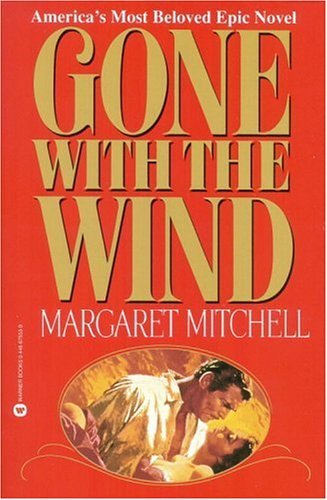
Gone with the Wind — Margaret Mitchell
First published: June 30, 1936 (Macmillan Publishers)
Pages: 1,037 (Scribner 75th-anniversary edition)
Goodreads: 4.31★ (1.26M+ ratings) · view
Audiobook runtime: ~49h Linda Stephens / Macmillan Audio canonical unabridged · ~48h 30m John Bedford Lloyd / Simon & Schuster Audio · ~6h Mills Lane / Dove Audio 1991 abridged
Commercial scale: 30M+ cumulative-global sales / 60M-lifetime-including-sequels · 50+ translations · 90 years continuous readership · Pulitzer Prize 1937 · National Book Award 1936 · universally-taught American-historical-fiction / Southern-literature · 1.26M+ Goodreads ratings
Awards & Recognition: Pulitzer Prize for Fiction 1937 · National Book Award 1936 · 1939 film 8 Academy Awards including Best Picture / Best Director / Best Actress / Best Supporting Actress (McDaniel first Black Oscar winner) · AFI #6 greatest American film · AFI #1 greatest movie quote ('Frankly, my dear, I don't give a damn') · AFI #1 greatest screen love story
Cultural position: 1939 Victor Fleming MGM w/ Vivien Leigh / Clark Gable / Olivia de Havilland / Leslie Howard / Hattie McDaniel 8-Oscar-wins · 2020 HBO Max pulled-and-restored with Jacqueline Stewart historical contextualization · 1991 Ripley Scarlett sequel CBS miniseries w/ Joanne Whalley-Kilmer / Timothy Dalton · 2007 McCaig Rhett Butler's People · 2001 Randall The Wind Done Gone legal-landmark · 90th anniversary 2026 · Mitchell Atlanta History Center / Mitchell House
Mitchell's 1936 Pulitzer-winning Civil-War-and-Reconstruction epic — Gone with the Wind's 63-chapter 1,037-page five-part narrative of Scarlett O'Hara's coming-of-age at North-Georgia cotton plantation Tara on the eve of the Civil War, her obsessive unreciprocated love for married-Ashley-Wilkes and successive marriages to Charles Hamilton / Frank Kennedy / Rhett Butler, Atlanta's 1864 Sherman's-March fall and burning with Melanie's childbirth during bombardment and Prissy's 'I don't know nothin' 'bout birthin' babies' canonical moment, Scarlett's Reconstruction-era Tara starvation-survival vow 'As God is my witness, I'll never be hungry again' and Atlanta post-war lumber-business with convict-labor, Rhett's departure with 'Frankly, my dear, I don't give a damn' and Scarlett's closing 'Tomorrow is another day' resolve — has been universally regarded as one of the most-commercially-influential American-historical-fiction novels since its 1936 Macmillan publication, with the Linda Stephens / Macmillan Audio ~49-hour unabridged production widely-praised as the canonical contemporary audiobook, the 1939 Victor Fleming MGM film adaptation w/ Vivien Leigh / Clark Gable / Hattie McDaniel's groundbreaking first-Black-Oscar win and 8-Oscar wins establishing Gone with the Wind as AFI-#6 greatest-American-film, the 2020 HBO Max temporary-removal-and-restoration-with-Stewart-introduction episode establishing the novel's 2020s contested-canon status, and 90 years of continuous literary-critical popular / film-canonical / contested-historiographical engagement across 30M+ cumulative sales and universal Southern-literature / American-historical-fiction / Pulitzer-canonical / women's-writing curriculum. Use CastReader AI TTS on Kindle Gone with the Wind text →
Gone with the Wind is Margaret Mitchell's 1936 novel about a vain, self-absorbed Southern belle's coming-of-age across the American Civil War and Reconstruction at her family's North-Georgia cotton plantation Tara. 16-year-old Scarlett O'Hara's obsessive unreciprocated love for the gentlemanly Ashley Wilkes (who marries his cousin the saintly Melanie Hamilton) drives 63 chapters of five-part narrative across April 1861 through 1873. Scarlett spitefully marries Charles Hamilton (Melanie's brother); widowed when Charles dies of measles weeks into the Civil War; Atlanta exile with widowed-Pittypat / Melanie household; meets blockade-runner Rhett Butler at a charity ball; Atlanta's 1864 fall to Sherman's Union army with Melanie's childbirth during bombardment and Prissy's canonical 'I don't know nothin' 'bout birthin' babies' moment; flees with Melanie / baby / Prissy to Tara; finds mother Ellen dead of typhoid and father Gerald broken by grief. Reconstruction-era Tara survival with Scarlett's starvation-driven vow; marriage to sister Suellen's fiancé Frank Kennedy for his general-store money; Atlanta post-war lumber-business with convict-labor; Frank's death in a Klan raid avenging her near-assault; marriage to Rhett Butler; birth of daughter Bonnie Blue; Bonnie's fatal horse-riding accident; Melanie's death from miscarriage; Scarlett's too-late realization that she loves Rhett not Ashley; Rhett's departure with 'Frankly, my dear, I don't give a damn'; Scarlett's closing 'Tomorrow is another day' resolve. Central themes: destruction and romanticization of the antebellum Old South / Lost-Cause mythology; Scarlett's complex anti-heroic protagonist; survival and adaptation; Irish-immigrant-vs-plantation-aristocrat class dynamics; period-specific slavery / Black-character depictions critically examined by contemporary scholars. At ~49h Linda Stephens / Macmillan Audio is the canonical unabridged contemporary audiobook; John Bedford Lloyd / Simon & Schuster Audio alternative unabridged; Mills Lane / Dove Audio 1991 abridged ~6h samplers.
This guide covers the ~49h runtime, the 63-chapter five-part structure, the 1939 Fleming film canonical status, 2020 HBO-Max contextualization episode, 90th-anniversary 2026-2027 engagement, and every free / paid path.
Why ~49h Matters
American-historical-fiction epic runtime and rating benchmark.
| Title | Runtime | Year | Goodreads rating |
|---|---|---|---|
| Gone with the Wind (Mitchell) — this book | ~49h | 1936 | 4.31★ |
| War and Peace (Tolstoy) | 61h | 1869 | 4.17★ |
| Les Misérables (Hugo) | 66h | 1862 | 4.21★ |
| The Stand (King, Complete and Uncut) | 47h 47m | 1978/1990 | 4.35★ |
| The Pillars of the Earth (Follett) | 40h 55m | 1989 | 4.32★ |
| Cold Mountain (Frazier) | 16h | 1997 | 3.94★ |
| The Killer Angels (Shaara) | 13h | 1974 | 4.34★ |
| To Kill a Mockingbird (Lee) | 12h 17m | 1960 | 4.27★ |
Takeaway: Gone with the Wind at 4.31★ / 1.26M+ Goodreads ratings is among the highest-engagement American-historical-fiction epics. For first-time Southern-literature listeners: To Kill a Mockingbird (12h 17m) → Gone with the Wind (49h, longer commitment) → The Sound and the Fury (9h) → Beloved (9h 55m) forms the accessible Southern-canon progression. For first-time American-Civil-War listeners: The Red Badge of Courage (3h 30m) → Gone with the Wind (49h) → Cold Mountain (16h) → The Killer Angels (13h) forms the Civil-War-literature progression. Gone with the Wind's combined dual canonical-status (Southern-literature + American-Civil-War-historical-fiction) and 49-hour length makes it one of the most-substantive commitments in American literary-fiction canon.
The 1936-2026 Trajectory
- 1900 November 8: Margaret Munnerlyn Mitchell born Atlanta, Georgia; daughter of Confederate-veteran-association president Eugene Muse Mitchell
- 1919: Mitchell enters Smith College but withdraws after her mother's death in the 1918 influenza pandemic
- 1922-1926: Mitchell works as feature-writer for Atlanta Journal Sunday Magazine
- 1925: Mitchell marries John Marsh (second marriage after brief Berrien 'Red' Upshaw marriage)
- 1926-1936: Mitchell writes Gone with the Wind across ten years at her Peachtree Street Atlanta apartment
- 1936 June 30: Gone with the Wind published by Macmillan Publishers — immediate bestseller; 1M copies sold in first 6 months
- 1936: National Book Award (inaugural year)
- 1937 May: Pulitzer Prize for Fiction
- 1936-1939: Selznick International Pictures' 'Search for Scarlett' casting — 1,400 actresses tested
- 1939 December 15: Victor Fleming Gone with the Wind premieres Atlanta Loew's Grand Theatre
- 1940 February 29: 8 Academy Awards including Hattie McDaniel first-Black-Oscar winner for Best Supporting Actress
- 1949 August 16: Margaret Mitchell killed by taxi on Peachtree Street, Atlanta, age 48
- 1991 September: Alexandra Ripley Scarlett (Mitchell-estate-commissioned sequel) — bestseller
- 1994 November: CBS Scarlett 8-hour miniseries w/ Joanne Whalley-Kilmer / Timothy Dalton
- 1998: AFI 100 Years... 100 Movies ranks #4 (1998) / #6 (2007)
- 2001 April: Alice Randall The Wind Done Gone — parody from slave-characters' perspective; SunTrust Bank v. Houghton Mifflin legal-landmark fair-use case
- 2007 November: Donald McCaig Rhett Butler's People (Mitchell-estate-authorized second sequel)
- 2011 June: Scribner Book Company 75th-anniversary edition w/ Pat Conroy introduction
- 2011: Linda Stephens / Macmillan Audio unabridged audiobook
- 2020 June: HBO Max briefly removes 1939 film following George Floyd protests
- 2020 June-July: HBO Max restores 1939 film with Jacqueline Stewart pre-film introduction providing historical contextualization
- 2020: UK / EU copyright expires (life-plus-70); various public-domain reissues
- 2026 June 30: 90th anniversary of Gone with the Wind publication — various 2026-2027 commemorative events and new scholarship expected
- 2026 April: 90 years continuous readership · Pulitzer / National Book Award canonical · contested-canon status established · universally-assigned Southern-literature / American-historical-fiction curriculum · 30M+ cumulative sales
The 63-Chapter Five-Part Structure
Understanding Mitchell's novel architecture:
Part One (Chapters 1-7) — Tara April 1861:
- Chapters 1-6 — 16-year-old Scarlett O'Hara at Tara; Twelve Oaks barbecue; Ashley's engagement to Melanie; Scarlett's spite-proposal to Charles Hamilton
- Chapter 7 — Fort Sumter April 12, 1861; Civil War begins; Scarlett marries Charles; Ashley marries Melanie
Part Two (Chapters 8-15) — Atlanta 1862-1863:
- Chapters 8-11 — Charles dies of measles; Scarlett's Atlanta exile with widowed-Pittypat / Melanie household; Atlanta charity-ball fundraiser
- Chapter 11 — Rhett Butler dances with widow Scarlett at charity ball — the novel's Scarlett-Rhett first-courtship moment
- Chapters 12-15 — Atlanta 1862-1863; Melanie's pregnancy; Confederate military reverses
Part Three (Chapters 16-30) — Atlanta Falls 1864:
- Chapters 16-17 — Confederate siege of Atlanta
- Chapter 22 — Melanie's childbirth during Atlanta bombardment — Scarlett delivers baby Beau Wilkes; Prissy's canonical 'I don't know nothin' 'bout birthin' babies'
- Chapter 24 — Scarlett / Melanie / baby / Prissy / Wade flee burning Atlanta with Rhett Butler's carriage to Rough-and-Ready; Rhett abandons them to join Confederate army
- Chapters 25-26 — Journey to Tara; Scarlett finds mother Ellen dead of typhoid; father Gerald broken
- Chapter 27 — Scarlett's starvation vow: 'As God is my witness, I'll never be hungry again'
Part Four (Chapters 31-47) — Reconstruction Tara and Atlanta:
- Chapters 31-36 — Tara survival; Scarlett shoots Yankee deserter; cotton-picking; Frank Kennedy courtship
- Chapter 36 — Scarlett marries Frank Kennedy (her sister Suellen's fiancé) for his general-store money
- Chapters 37-44 — Atlanta post-war lumber-business with convict-labor; Scarlett drives alone through Shantytown; near-assault
- Chapter 45 — Klan raid avenging Scarlett's near-assault; Frank Kennedy killed
- Chapter 47 — Scarlett marries Rhett Butler
Part Five (Chapters 48-63) — Scarlett and Rhett 1867-1873:
- Chapters 48-53 — Scarlett-Rhett New Orleans honeymoon; Atlanta red-brick mansion; continuing Ashley-obsession
- Chapter 54 — Rhett's marital-rape of Scarlett (widely-analyzed critically-contested scene)
- Chapter 55-57 — Bonnie Blue Butler's birth; Scarlett-Rhett marital deterioration
- Chapter 60 — Bonnie's fatal horse-riding accident
- Chapter 61-62 — Melanie's death from miscarriage; Scarlett's realization she loves Rhett
- Chapter 63 — 'Frankly, my dear, I don't give a damn' Rhett's departure; 'Tomorrow is another day' Scarlett's closing resolve
63 chapters arranged in five parts covering April 1861 through 1873, approximately 418,000 words. Mitchell's canonical set-pieces: Twelve Oaks barbecue, Scarlett's spite-proposal to Charles, Atlanta charity-ball Rhett-first-meeting, Atlanta burning and Melanie's childbirth, Scarlett's starvation vow 'As God is my witness, I'll never be hungry again', Frank Kennedy Klan-raid, Rhett-Scarlett marriage, Rhett's marital-rape scene, Bonnie's death, Melanie's death, Rhett's 'Frankly, my dear, I don't give a damn' departure, Scarlett's 'Tomorrow is another day' closing — widely studied as the novel's twelve structural pillars.
Every Way to Listen
- Linda Stephens / Macmillan Audio — ~49h canonical unabridged
- John Bedford Lloyd / Simon & Schuster Audio — ~48h 30m alternative unabridged (male-narrator-atypical-choice)
- Mills Lane / Dove Audio 1991 — ~6h abridged samplers
- Audible Premium 1 credit — ~$14.95 covers Linda Stephens Macmillan or John Bedford Lloyd S&S
- Libby (U.S. libraries) — 2-4 week wait given 49-hour length; Macmillan Stephens reliably stocked
- Hoopla — limited instant access
- Spotify Premium audiobook — 49h exceeds 15h monthly allocation (requires 4+ months allocation)
- Purchased Kindle edition — $8-12 Scribner 75th-anniversary Pat Conroy-introduction / Warner Books mass-market / Pocket Books
- UK / EU public-domain — post-2020 reissues (UK / EU copyright expired 2020; US copyright continues to 2044)
- CastReader AI TTS with Kindle Gone with the Wind edition — unlimited re-listens, adjustable pace
Gone with the Wind's US copyright continues to 2044 — no US-territory public-domain free path until 2044; UK / EU public-domain paths post-2020. Mitchell-estate-authorized commercial audiobooks are the primary US path.
Libby Wait Times (April 2026)
Survey of major U.S. library networks as of April 2026.
- NYPL / Brooklyn Public Library: 2-4 week wait (Linda Stephens / Macmillan Audio most-requested canonical; John Bedford Lloyd / Simon & Schuster available)
- Los Angeles Public Library: 2-4 week wait
- Chicago Public Library: 2-4 week wait
- Seattle Public Library: 1-3 week wait
- Boston Public Library: 2-4 week wait (university curriculum demand)
- Atlanta-Fulton Public Library: 1-3 week wait (Mitchell-Atlanta local-interest demand)
- 90th-anniversary 2026 demand: 2026-2027 library waits may extend to 4-6 weeks as anniversary commemorations drive renewed demand
Gone with the Wind has moderate library waits given its 49-hour length. Libby is recommended free path despite the waits. The 90th-anniversary 2026 commemorations are expected to drive elevated Q2-Q4 2026 library demand.
Why Kindle + CastReader Suits Gone with the Wind
Gone with the Wind's 63-chapter five-part structure and substantive ~49h runtime make it well-suited to CastReader AI TTS — 6-8 week evening-session consumption pattern is manageable in weekday-commute+weekend-sessions, and the novel's contested-canon status means literature and American-Studies students commonly re-read across semesters for Southern-literature / women's-writing / critical-race-studies engagement.
Listeners commonly return to:
- Part One Twelve Oaks barbecue — the novel's antebellum-South opening set-piece
- Part Three Atlanta burning and Melanie's childbirth — the novel's Civil-War-fall climax
- Chapter 27 Scarlett's starvation vow — universally-quoted 'As God is my witness, I'll never be hungry again'
- Part Four Reconstruction-Tara survival and Atlanta lumber-business
- Chapter 45 Klan raid and Frank Kennedy's death — the novel's Reconstruction critical-framing pivot
- Chapter 54 Rhett's marital-rape scene — the novel's most-critically-contested scene
- Chapter 63 Rhett's departure and 'Frankly, my dear, I don't give a damn' — the novel's universally-iconic closing
For 90th-anniversary 2026-2027 engagement: CastReader's cross-device bookmarking enables reading-with-contemporary-critical-frameworks — Alice Randall's The Wind Done Gone (2001) / Donald McCaig's Rhett Butler's People (2007) / Jacqueline Stewart's HBO-Max introduction / contemporary-scholarship provide essential counter-narrative engagement. CastReader supports Gone with the Wind → To Kill a Mockingbird → Beloved → Cold Mountain comprehensive Southern-literature / American-Civil-War progression.
CastReader's pronunciation overrides handle Mitchell's Southern-Georgia-Irish-French proper-noun catalog: Scarlett O'Hara (SCAR-let oh-HAH-rah), Rhett Butler, Ashley Wilkes, Melanie Hamilton Wilkes, Gerald O'Hara, Ellen Robillard O'Hara (ROH-beh-lard), Suellen O'Hara, Carreen O'Hara (kah-REEN), Charles Hamilton, Pittypat Hamilton, Frank Kennedy, India Wilkes, Mammy, Prissy, Pork, Dilcey, Big Sam, Uncle Peter, Will Benteen, Belle Watling, Bonnie Blue Butler, Beau Wilkes, Twelve Oaks, Tara, Clayton County Georgia, Jonesboro, Atlanta, Pittypat's Peachtree Street, Sherman's March, Marietta. CastReader handles Mitchell's 1860s-Georgia-Southern-Irish-French register with period-appropriate pronunciation options.
Send to Phone for Southern-Literature Progression
At ~49h Gone with the Wind fits a 6-8 week consumption timeline. Send to Phone preserves CastReader position across device switches — complete Part One and Part Two during weekday commutes weeks 1-2, Part Three and Part Four during weekend sessions weeks 3-5, Part Five during weekend sessions weeks 6-8. For Southern-literature progression, completing Gone with the Wind (49h) and proceeding to To Kill a Mockingbird (12h 17m), The Sound and the Fury (9h), and Beloved (9h 55m) forms the Southern-canon progression (~80h combined); for American-Civil-War literature progression, continuing through The Red Badge of Courage (3h 30m), Cold Mountain (16h), and The Killer Angels (13h) forms the Civil-War-literature progression (~81h combined).
Limitations and Honest Notes
- Significant racial content requiring critical framing — the novel's Lost-Cause historical-interpretation (Reconstruction-as-tragedy / Klan-as-protective / Black-characters-depicted-through-1930s-Southern-white-mistress perspective) demands contemporary critical engagement; contemporary scholarly editions and Jacqueline Stewart's HBO-Max introduction provide essential context
- Use of the n-word — approximately 100+ instances, per critical-edition counts; unabridged reading requires critical context and historical framing
- Period-specific Confederate sympathies — Mitchell's father was a Confederate Civil-War-veterans' association president; the novel's antebellum-South romanticization reflects 1930s-Southern-family perspective
- Period-specific gender politics — Scarlett's cross-dressing economic-agency is progressive for 1936 but her physical-submission to Rhett Butler and marital-rape scene in Chapter 54 demand critical framing; contemporary scholars examine Mitchell's complex-ambivalent gender-politics
- Slavery depicted through house-slave sympathetic-loyal-family-member perspective — Mammy / Prissy / Pork / Dilcey house-slave characters are depicted sympathetically as loyal family-members; the institutional violence of slavery is largely off-page; Alice Randall's The Wind Done Gone (2001) provides counter-narrative from slave-characters' perspective
- 49-hour length — substantive reading commitment; pacing is remarkably-consistent across five parts but requires 6-8 week consumption
- Content warnings — Atlanta burning / Civil-War injury / Ku Klux Klan raids / Bonnie's fatal horse accident / Scarlett's miscarriage / Rhett's marital-rape scene / Melanie's death in childbirth
- Period-specific linguistic register — Irish-immigrant / French-Creole / Georgia-Southern / Black-house-slave dialect renderings require period-appropriate narration; Linda Stephens / John Bedford Lloyd handle this well
- The 1939 Fleming film (3h 58m) serves as essential companion-watch with critical-framing — Jacqueline Stewart HBO-Max introduction is widely recommended as accessible-critical-context; contemporary scholarly frameworks provide essential counter-narrative engagement
- Readers should treat Gone with the Wind as contested-canonical text requiring critical engagement, not as straightforward historical-fiction — the novel's Lost-Cause / Confederate-sympathy / racial-depictions demand scholarly-critical frameworks (Eric Foner's Reconstruction / W.E.B. Du Bois's Black Reconstruction / Alice Randall's The Wind Done Gone / Ed Ball's Slaves in the Family) to contextualize contemporary reading
Related Reading
- Listen to Kindle — CastReader's Kindle-to-TTS path
- Send to Phone — cross-device position sync
- Kindle Text to Speech — Kindle TTS options overview
- Turn Kindle into Audiobook Free — free audiobook paths
- To Kill a Mockingbird (Lee) Audiobook Guide — Southern-literature peer; 1960
- Beloved (Morrison) Audiobook Guide — African-American post-Civil-War foundational; 1987
- The Nightingale (Hannah) Audiobook Guide — women-authored historical-fiction WWII-France peer
- The Pillars of the Earth (Follett) Audiobook Guide — historical-epic peer; 1989
