All the Light We Cannot See Audiobook & Text to Speech Guide (2026) — Anthony Doerr's 2015 Pulitzer WWII Blind-Girl / Radio-Soldier Masterwork
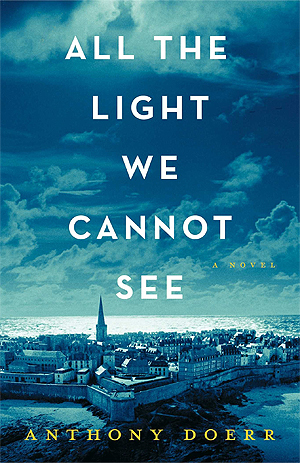
All the Light We Cannot See — Anthony Doerr
First published: May 2014 (Scribner)
Pages: 531 (hardcover)
Goodreads: 4.33★ (1.4M+ ratings) · view
Audiobook runtime: ~16h 2m · Zach Appelman / Hachette Audio canonical production
Major prize: 2015 Pulitzer Prize for Fiction · 2014 National Book Award finalist
Commercial scale: 15M+ global sales · 120+ weeks NYT · 40+ language translations
Screen adaptation: 2023 Netflix 4-part limited series · Shawn Levy director · Aria Mia Loberti / Mark Ruffalo / Hugh Laurie
The defining post-2000s WWII literary novel — 2015 Pulitzer Prize for Fiction, 15+ million copies, 120+ weeks NYT bestseller, the canonical Zach Appelman Hachette Audio production, and the single literary-WWII book that achieved both prize prestige and mass commercial scale. Skip the Libby wait with Kindle + free CastReader AI TTS →
All the Light We Cannot See is Anthony Doerr's 2014 WWII novel — a decade-in-writing 531-page masterwork tracing two parallel lives converging in August 1944 Saint-Malo: Marie-Laure LeBlanc, a blind French girl who flees Nazi-occupied Paris with her locksmith father carrying possibly the legendary Sea of Flames diamond from the Musée d'Histoire Naturelle, and Werner Pfennig, a German orphan radio-prodigy whose technical gift lifts him from the Zollverein coal-mining orphanage into the brutal Schulpforta Nazi boarding school and eventually into a Wehrmacht signals unit hunting Resistance radio operators. The novel's non-linear structure braids two timelines — August 1944 Saint-Malo under Allied bombardment and the 1934-1944 backstory — across 187 fragmentary short chapters averaging 2.8 pages each. Doerr's central preoccupation: 'light' operates across invisible radio waves (Werner's technical gift) and the unseen moral light within ordinary people under impossible pressure. The novel earned the 2015 Pulitzer Prize for Fiction, was a 2014 National Book Award finalist, spent 120+ weeks on the NYT bestseller list, has sold 15M+ copies globally across 40+ languages, and received a 2023 Netflix 4-part limited series directed by Shawn Levy starring Aria Mia Loberti (blind young actress in her screen debut) as Marie-Laure, Louis Hofmann as Werner, Mark Ruffalo as Daniel LeBlanc, and Hugh Laurie as Uncle Étienne. At 16h 2m with Zach Appelman's Hachette Audio canonical production, All the Light is the flagship Pulitzer-era literary WWII audiobook and the universal entry point into ambitious post-2000s WWII literary fiction.
This guide covers the 16h 2m runtime, the Zach Appelman canonical production, the 187-chapter non-linear architecture, and every free / paid path.
Why 16h 2m Matters for Pulitzer Literary Fiction
Pulitzer-era literary-fiction runtime benchmark.
| Title | Runtime | Year | Prize |
|---|---|---|---|
| All the Light We Cannot See (Doerr) — this book | 16h 2m | 2014 | 2015 Pulitzer |
| The Underground Railroad (Whitehead) | 10h 45m | 2016 | 2017 Pulitzer |
| The Overstory (Powers) | 22h 58m | 2018 | 2019 Pulitzer |
| The Nickel Boys (Whitehead) | 6h 50m | 2019 | 2020 Pulitzer |
| The Netanyahus (Cohen) | 8h 13m | 2021 | 2022 Pulitzer |
| Demon Copperhead (Kingsolver) | 21h 3m | 2022 | 2023 Pulitzer |
| Trust (Diaz) | 11h 32m | 2022 | 2023 Pulitzer (co-winner) |
Takeaway: All the Light's 16h 2m sits in the contemporary Pulitzer literary-novel runtime median. The 187-chapter architecture (averaging 2.8 pages per chapter) makes the novel uniquely well-suited to commute / audiobook consumption — each chapter offers a natural pause point, and re-entry after interruption is frictionless.
The Zach Appelman Canonical Production
Hachette Audio's Zach Appelman recording (16h 2m) remains the canonical All the Light production. Appelman's measured, lyrical delivery handles:
- Marie-Laure register: French-inflected domestic-and-danger, age-calibrated from six-year-old-blindness to twenty-year-old-Resistance-broadcaster
- Werner register: clipped German schoolhouse-and-battlefield, age-calibrated from eight-year-old-orphan-radio-discovery to eighteen-year-old-signals-soldier
- French pronunciation: Marie-Laure LeBlanc, Saint-Malo, Étienne, Daniel, Madame Manec, Musée d'Histoire Naturelle, rue des Patriarches, rue Vauborel, Hotel of the Bees
- German pronunciation: Werner Pfennig, Jutta, Zollverein, Schulpforta, Napola, Frederick, Volkheimer, Sergeant Major von Rumpel
- Technical vocabulary: radio physics, mollusks (Marie-Laure's Natural History Museum passion), gemology (Sea of Flames lore)
- Short-chapter pacing: Doerr's fragmentary 187-chapter architecture handled with clean natural pauses between chapters
No alternative commercial production has been recorded. The Appelman reading is definitive.
The 187-Chapter Non-Linear Architecture
All the Light organizes into 14 parts alternating between two timelines:
August 1944 track: Marie-Laure hiding in Uncle Étienne's attic at rue Vauborel 4, Saint-Malo, under Allied bombardment, transmitting Resistance broadcasts. Werner in Sergeant Volkheimer's signals unit tracking the broadcaster, closing toward the same attic.
1934-1944 backstory track: Marie-Laure's blindness at six, her father's miniature-city teaching methodology, the Natural History Museum, the 1940 Nazi invasion, flight south to Saint-Malo, life with Étienne. Werner's discovery of the radio in Zollverein, the selection for Schulpforta, Frederick's bird-book and subsequent beating, the Eastern Front deployment.
The two timelines converge in the Saint-Malo attic — August 8-12, 1944 — with the Sea of Flames diamond, Werner's moral choice, and the post-war 1974 / 2014 epilogue chapters (Étienne's Paris life, Marie-Laure's Natural History Museum career).
Commercial Scale and Critical Reception
All the Light's commercial trajectory is exceptional for a Pulitzer literary novel:
- 15M+ global sales across 40+ language translations since 2014
- 120+ weeks on NYT bestseller list — among the longest Pulitzer fiction runs ever
- 2015 Pulitzer Prize for Fiction winner
- 2014 National Book Award finalist
- Carnegie Medal for Excellence in Fiction
- 4.33★ Goodreads across 1,400,000+ ratings
- Universal book-club adoption across 10+ years
- 2023 Netflix 4-part limited series — Shawn Levy director, Steven Knight screenplay, Aria Mia Loberti / Louis Hofmann / Mark Ruffalo / Hugh Laurie cast
Doerr's 10-year writing process (2004-2014) produced a novel that satisfies both the Pulitzer jury (literary merit) and general readers (emotional momentum) — an unusual combination that anchored the book's sustained commercial run.
The Commercial Ecosystem — Audible / Libby / Kindle / Spotify
All the Light's sustained demand means the book appears in every major audio ecosystem:
- Audible Premium: 1 credit ($14.95 first-month, $22.95/mo thereafter) or purchased at $18-28
- Libby (library): 1-3 week waits as of April 2026 — wait times lower than The Nightingale due to broader library acquisition following 2015 Pulitzer and 2023 Netflix release
- Hoopla: stocks vary by library network; often instant-lend
- Audible Plus: occasionally rotates in
- Spotify Premium: at 16h 2m exceeds the 15-hour monthly audiobook allocation marginally (about 1h 2m), requiring partial listen + month 2 completion
- Kindle: $14-17 own-forever + unlimited re-reads
- Kindle + CastReader: free AI TTS on owned Kindle, unlimited re-listens at adjustable pace
For first-listeners the Zach Appelman Hachette Audio production is the universal commercial recommendation.
For listeners wanting unlimited re-engagement — particularly the specific-chapter re-read use case that the 187-chapter architecture generates heavily — Kindle ownership plus free CastReader AI TTS provides the strongest complementary path.
CastReader for Re-Read and Netflix-Comparison Analysis
CastReader suits All the Light re-listeners particularly well:
- Chapter bookmarking: jump to the Paris-to-Saint-Malo flight, the Schulpforta Frederick-bird-book scene, the first Werner-finds-radio scene, the Saint-Malo bombardment, or the 1974 Étienne epilogue instantly
- Paragraph highlighting: trace specific sentences across Doerr's deliberately-fragmentary short-chapter architecture
- Adjustable pace: 1.0x canonical for first listen → 1.5x for re-read pacing → slow-down at the Sea of Flames lore passages and Saint-Malo attic convergence
- Pronunciation overrides: Marie-Laure LeBlanc, Werner Pfennig, Saint-Malo, Étienne, Schulpforta, Napola, Zollverein, Volkheimer, von Rumpel, Musée d'Histoire Naturelle, Sea of Flames, rue Vauborel
- Cross-device sync: desktop for literary analysis → phone for commute re-listen via Send to Phone
For book-club hosts and literary-discussion leaders, CastReader's chapter-level navigation materially aids the 187-chapter structure conversation that All the Light reliably generates. For viewers of the 2023 Netflix limited series revisiting the novel to compare adaptation choices, CastReader's specific-chapter re-read is the strongest complementary path.
Quick Answer — Which Path Fits Your Need
- First listen, polished experience, Audible credit or Libby available: Zach Appelman Hachette Audio. Universally recommended.
- No-wait access, willing to pay once: Kindle ($14-17) + Audible purchase ($18-28).
- Free, unlimited re-engagement, willing to wait for library: Libby (1-3 week wait) + Kindle own-forever ($14-17) + free CastReader AI TTS for re-reads.
- Netflix-adaptation comparison, specific-chapter analysis: Kindle + CastReader — chapter-level navigation and pronunciation control.
- Commute listening without carrying laptop: Send to Phone from desktop CastReader session.
Related Reading
- Kindle Text to Speech Guide — full hub on Kindle TTS options
- Audible Alternatives Free Guide — comparison of free audiobook paths
- Turn eBook into Audiobook — AI TTS for personal library
- The Nightingale (Kristin Hannah) — WWII historical-fiction peer
- The Book Thief (Markus Zusak) — WWII literary peer
- The Great Alone (Kristin Hannah) — Alaska historical-fiction
Bottom line: All the Light We Cannot See is the defining post-2000s Pulitzer-era WWII literary novel — Zach Appelman's Hachette Audio production is the universal commercial recommendation; for the 187-chapter specific-passage re-read, literary analysis, and Netflix-adaptation-comparison use cases that Doerr's deliberately-fragmentary architecture generates heavily, Kindle ownership plus free CastReader AI TTS remains the strongest complementary path.
