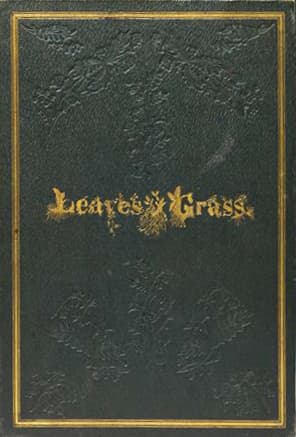
E-text prepared by Andrea Ball, Jon Ingram, Charles Franks, and the Online
Distributed Proofreading Team
POEMS BY WALT WHITMAN
by WALT WHITMAN
SELECTED AND EDITED BY WILLIAM MICHAEL ROSSETTI
A NEW EDITION
"Or si sa il nome, o per tristo o per buono, E si sa pure al mondo ch'io ci sono." —MICHELANGELO.
"That Angels are human forms, or men, I have seen a thousand times. I have also frequently told them that men in the Christian world are in such gross ignorance respecting Angels and Spirits as to suppose them to be minds without a form, or mere thoughts, of which they have no other idea than as something ethereal possessing a vital principle. To the first or ultimate heaven also correspond the forms of man's body, called its members, organs, and viscera. Thus the corporeal part of man is that in which heaven ultimately closes, and upon which, as on its base, it rests." —SWEDENBORG.
"Yes, truly, it is a great thing for a nation that it get an articulate voice—that it produce a man who will speak forth melodiously what the heart of it means." —CARLYLE.
"Les efforts de vos ennemis contre vous, leurs cris, leur rage impuissante, et leurs petits succès, ne doivent pas vous effrayer; ce ne sont que des égratignures sur les épaules d'Hercule." —ROBESPIERRE.
TO WILLIAM BELL SCOTT.
DEAR SCOTT,—Among various gifts which I have received from you, tangible and intangible, was a copy of the original quarto edition of Whitman's Leaves of Grass, which you presented to me soon after its first appearance in 1855. At a time when few people on this side of the Atlantic had looked into the book, and still fewer had found in it anything save matter for ridicule, you had appraised it, and seen that its value was real and great. A true poet and a strong thinker like yourself was indeed likely to see that. I read the book eagerly, and perceived that its substantiality and power were still ahead of any eulogium with which it might have come commended to me—and, in fact, ahead of most attempts that could be made at verbal definition of them.
Some years afterwards, getting to know our friend Swinburne, I found with much satisfaction that he also was an ardent (not of course a blind) admirer of Whitman. Satisfaction, and a degree almost of surprise; for his intense sense of poetic refinement of form in his own works and his exacting acuteness as a critic might have seemed likely to carry him away from Whitman in sympathy at least, if not in actual latitude of perception. Those who find the American poet "utterly formless," "intolerably rough and floundering," "destitute of the A B C of art," and the like, might not unprofitably ponder this very different estimate of him by the author of Atalanta in Calydon.
May we hope that now, twelve years after the first appearance of Leaves of Grass, the English reading public may be prepared for a selection of Whitman's poems, and soon hereafter for a complete edition of them? I trust this may prove to be the case. At any rate, it has been a great gratification to me to be concerned in the experiment; and this is enhanced by my being enabled to associate with it your name, as that of an early and well-qualified appreciator of Whitman, and no less as that of a dear friend.
Yours affectionately, W. M. ROSSETTI.
October 1867.
CONTENTS.
PREFATORY NOTICE
PREFACE TO THE FIRST EDITION OF LEAVES OF GRASS
CHANTS DEMOCRATIC: STARTING FROM PAUMANOK AMERICAN FEUILLAGE THE PAST-PRESENT YEARS OF THE UNPERFORMED FLUX TO WORKING MEN SONG OF THE BROAD-AXE ANTECEDENTS SALUT AU MONDE A BROADWAY PAGEANT OLD IRELAND BOSTON TOWN FRANCE, THE EIGHTEENTH YEAR OF THESE STATES EUROPE, THE SEVENTY-SECOND AND SEVENTY-THIRD YEARS OF THESE STATES TO A FOILED REVOLTER OR REVOLTRESS
DRUM TAPS: MANHATTAN ARMING 1861 THE UPRISING BEAT! BEAT! DRUMS! SONG OF THE BANNER AT DAYBREAK THE BIVOUAC'S FLAME BIVOUAC ON A MOUNTAIN SIDE CITY OF SHIPS VIGIL ON THE FIELD THE FLAG THE WOUNDED A SIGHT IN CAMP A GRAVE THE DRESSER A LETTER FROM CAMP WAR DREAMS THE VETERAN'S VISION O TAN-FACED PRAIRIE BOY MANHATTAN FACES OVER THE CARNAGE THE MOTHER OF ALL CAMPS OF GREEN DIRGE FOR TWO VETERANS SURVIVORS HYMN OF DEAD SOLDIERS SPIRIT WHOSE WORK IS DONE RECONCILIATION AFTER THE WAR
WALT WHITMAN: ASSIMILATIONS A WORD OUT OF THE SEA CROSSING BROOKLYN FERRY NIGHT AND DEATH ELEMENTAL DRIFTS WONDERS MIRACLES VISAGES THE DARK SIDE MUSIC WHEREFORE? QUESTIONABLE SONG AT SUNSET LONGINGS FOR HOME APPEARANCES THE FRIEND MEETING AGAIN A DREAM PARTING FRIENDS TO A STRANGER OTHER LANDS ENVY THE CITY OF FRIENDS OUT OF THE CROWD AMONG THE MULTITUDE
LEAVES OF GRASS: PRESIDENT LINCOLN'S FUNERAL HYMN O CAPTAIN! MY CAPTAIN! (FOR THE DEATH OF LINCOLN) PIONEERS! O PIONEERS TO THE SAYERS OF WORDS VOICES WHOSOEVER BEGINNERS TO A PUPIL LINKS THE WATERS TO THE STATES TEARS A SHIP GREATNESSES THE POET BURIAL THIS COMPOST DESPAIRING CRIES THE CITY DEAD-HOUSE TO ONE SHORTLY TO DIE UNNAMED LANDS SIMILITUDE THE SQUARE DEIFIC
SONGS OF PARTING: SINGERS AND POETS TO A HISTORIAN FIT AUDIENCE SINGING IN SPRING LOVE OF COMRADES PULSE OF MY LIFE AUXILIARIES REALITIES NEARING DEPARTURE POETS TO COME CENTURIES HENCE SO LONG!
POSTSCRIPT
PREFATORY NOTICE.
During the summer of 1867 I had the opportunity (which I had often wished for) of expressing in print my estimate and admiration of the works of the American poet Walt Whitman.[1] Like a stone dropped into a pond, an article of that sort may spread out its concentric circles of consequences. One of these is the invitation which I have received to edit a selection from Whitman's writings; virtually the first sample of his work ever published in England, and offering the first tolerably fair chance he has had of making his way with English readers on his own showing. Hitherto, such readers—except the small percentage of them to whom it has happened to come across the poems in some one of their American editions—have picked acquaintance with them only through the medium of newspaper extracts and criticisms, mostly short-sighted, sneering, and depreciatory, and rather intercepting than forwarding the candid construction which people might be willing to put upon the poems, alike in their beauties and their aberrations. Some English critics, no doubt, have been more discerning—as W. J. Fox, of old, in the Dispatch, the writer of the notice in the Leader, and of late two in the Pall Mall Gazette and the London Review;[2] but these have been the exceptions among us, the great majority of the reviewers presenting that happy and familiar critical combination— scurrility and superciliousness.
[Footnote 1: See The Chronicle for 6th July 1867, article Walt Whitman's Poems.]
[Footnote 2: Since this Prefatory Notice was written [in 1868], another eulogistic review of Whitman has appeared—that by Mr. Robert Buchanan, in the Broadway.]
As it was my lot to set down so recently several of the considerations which seem to me most essential and most obvious in regard to Whitman's writings, I can scarcely now recur to the subject without either repeating something of what I then said, or else leaving unstated some points of principal importance. I shall therefore adopt the simplest course—that of summarising the critical remarks in my former article; after which, I shall leave without further development (ample as is the amount of development most of them would claim) the particular topics there glanced at, and shall proceed to some other phases of the subject.