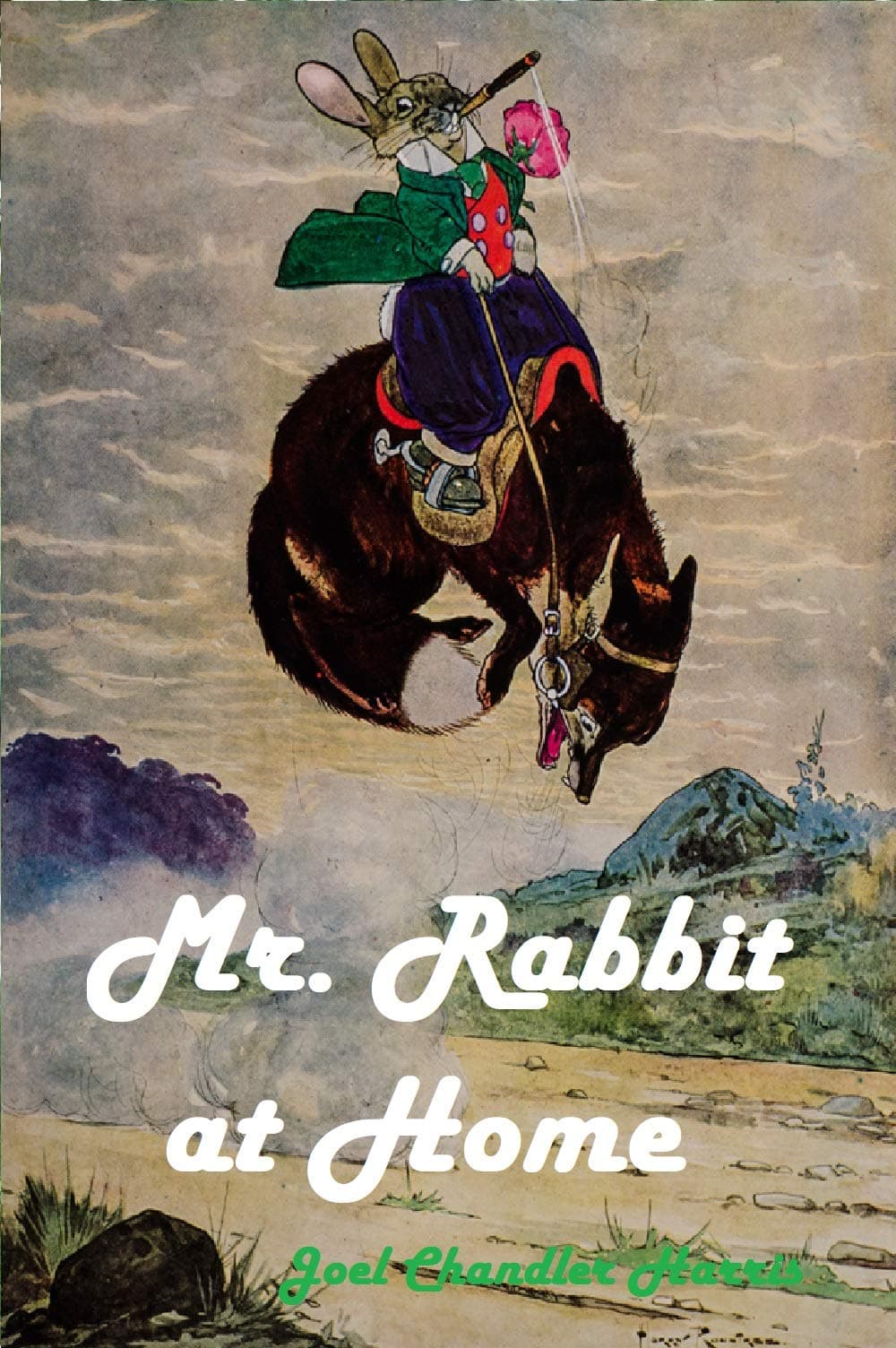
Mr. Rabbit at Home / A sequel to Little Mr. Thimblefinger and his Queer Country cover

Mr. Rabbit at Home / A sequel to Little Mr. Thimblefinger and his Queer Country

by Joel Chandler Harris

0Listen Free

Free AI audiobook with natural voice. No signup required.

About This Book

Joel Chandler Harris (December 9, 1848 – July 3, 1908) was an American journalist, fiction writer, and folklorist best known for his collection of Uncle Remus stories. Harris was born in Eatonton, Georgia, where he served as an apprentice on a plantation during his teenage years. He spent the majority of his adult life in Atlanta working as an associate editor at the Atlanta Constitution. Harris led two professional as the editor and journalist known as Joe Harris, he supported a vision of the New South with the editor Henry W. Grady (1880–1889), stressing regional and racial reconciliation after the Reconstruction era. As Joel Chandler Harris, fiction writer and folklorist, he wrote many 'Brer Rabbit' stories from the African-American oral tradition and helped to revolutionize literature in the process.Joel Chandler Harris was born in Eatonton, Georgia in 1848 to Mary Ann Harris, an Irish immigrant. His father, whose identity remains unknown, abandoned Mary Ann and the infant shortly after his birth. The parents had never married; the boy was named Joel after his mother's attending physician, Dr. Joel Branham. Chandler was the name of his mother's uncle.Harris remained self-conscious of his illegitimate birth throughout his life. A prominent physician, Dr. Andrew Reid, gave the Harris family a small cottage to use behind his mansion. Mary Harris worked as a seamstress and helped neighbors with their gardening to support herself and her son. She was an avid reader and instilled in her son a love of "My desire to write—to give expression to my thoughts—grew out of hearing my mother read The Vicar of Wakefield." Dr. Reid also paid for Harris' school tuition for several years. In 1856, Joe Harris briefly attended Kate Davidson's School for Boys and Girls, but transferred to Eatonton School for Boys later that year. He had an undistinguished academic record and a habit of truancy. Harris excelled in reading and writing, but was mostly known for his pranks, mischief, and sense of humor. Practical jokes helped Harris cloak his shyness and insecurities about his red hair, Irish ancestry, and illegitimacy, leading to both trouble and a reputation as a leader among the older boys. Oliver Herford (1863–1935) was an American writer, artist and illustrator who has been called "The American Oscar Wilde".[citation needed] As a frequent contributor to The Mentor, Life, and Ladies' Home Journal, he sometimes signed his artwork as "O Herford". In 1906 he wrote and illustrated the Little Book of Bores. He also wrote short poems like "The Chimpanzee" and "The Hen", as well as writing and illustrating "The Rubaiyat of a Persian Kitten" (1904) and "Excuse It Please" (1930). His sister Beatrice Herford was also a humorist. Ethel Mumford and Addison Mizner wrote a small book The Cynic's Calendar of Revised Wisdom for 1903 as a Christmas present and added Herford's name as an author as a joke. The printer made up more copies to sell and to everyone's surprise it was an astounding success. When Herford found out about it he wanted 90% of the royalties. He was awarded an equal third.

27

Chapters

~324 min

Est. Listening Time

English

Language

0

NIGHTS WITH UNCLE REMUS. Illustrated. 12mo, $1.50; paper, 50 cents.

MINGO, AND OTHER SKETCHES IN BLACK AND WHITE. 16mo, $1.25; paper, 50 cents.

BALAAM AND HIS MASTER, AND OTHER SKETCHES. 16mo, $1.25.

UNCLE REMUS AND HIS FRIENDS. Illustrated. 12mo, $1.50.

LITTLE MR. THIMBLEFINGER AND HIS QUEER COUNTRY. Illustrated. Crown 8vo, $2.00.

BROTHER LION WATCHED ME. Page 158

MR. RABBIT AT HOME

CONTENTS.

LIST OF ILLUSTRATIONS.

I. BUSTER JOHN ALARMS MR. RABBIT.

When Buster John and Sweetest Susan and Drusilla returned home after their first visit to Mr. Thimblefinger’s queer country, a curious thing happened. The children had made a bargain to say nothing about what they had seen and heard, but one day, when there was nobody else to hear what she had to say, Sweetest Susan concluded to tell her mother something about the visit she had made next door to the world. So she began and told about the Grandmother of the Dolls, and about Little Mr. Thimblefinger, and all about her journey under the spring. Her mother paid no attention at first, but after awhile she became interested, and listened intently to everything her little daughter said. Sometimes she looked serious, sometimes she smiled, and sometimes she laughed. Sweetest Susan couldn’t remember everything, but she told enough to astonish her mother.

“Darling, when did you dream such nonsense as that?” the lady asked.

“Oh, it wasn’t a dream, mamma,” cried Sweetest Susan. “I thought it was a dream at first, but it turned out to be no dream at all. Now, please don’t ask brother about it, and please don’t ask Drusilla, for we promised one another to say nothing about it. I didn’t intend to tell you, but I forgot and began to tell you before I thought.”

A little while afterward Sweetest Susan’s mother was telling her husband about the wonderful imagination of their little daughter, and then the neighbors got hold of it, and some of the old ladies put their heads together over their teacups and said it was a sign that Sweetest Susan was too smart to stay in this world very long.

One day, while Drusilla was helping about the house, Sweetest Susan’s mother took occasion to ask her where she and the children went the day they failed to come to dinner.

“We wuz off gettin’ plums, I speck,” replied Drusilla.

“Why, there were no plums to get,” said the lady.

“Well, ’m, ef ’t wa’n’t plums, hit must ’a’ been hick’y nuts,” explained Drusilla.

“Hickory nuts were not ripe, stupid.”

“Maybe dey wa’n’t,” said Drusilla stolidly; “but dat don’t hinder we chilluns from huntin’ ’em.”

“You know you didn’t go after hickory nuts, Drusilla,” the lady insisted. “Now I want you to tell me where you and the children went. I’ll not be angry if you tell me, but if you don’t”—

Drusilla could infer a good deal from the tone of the lady’s voice, but she shook her head.

“Well, ’m,” she said, “we went down dar by de spring, an’ down dar by de spring branch, an’ all roun’ down dar. Ef we warn’t huntin’ plums ner hick’y nuts, I done fergot what we wuz huntin’.”

Drusilla seemed so much in earnest that the lady didn’t push the inquiry, but when she went into another room for a moment, the negro girl looked after her and remarked to herself:—

“I done crossed my heart dat I wouldn’t tell, an’ I ain’t gwine ter. Ef I wuz ter tell, she wouldn’t b’lieve me, an’ so dar ’t is!”

Sweetest Susan was careful to say nothing to Buster John and Drusilla about the slip of the tongue that caused her to tell her mother about their adventures in Mr. Thimblefinger’s queer country; but she didn’t feel very comfortable when Drusilla told how she had been questioned by her mistress.

“Ef somebody ain’t done gone an’ tol’ ’er,” said Drusilla, “she got some mighty quare notions in ’er head.”

Buster John, who had ideas of his own, ignored all this, and said he was going to put an apple in the spring the next day and watch for Mr. Thimblefinger.

“Well, ef you gwine down dar any mo’,” remarked Drusilla, “you kin des count me out, kaze I ain’t gwine ’long wid you. I’m one er deze yer kind er quare folks what know pine blank when dey done got nuff. I been shaky ever since we went down in dat ar place what wa’n’t no place.”

“You will go,” said Buster John.
Continue reading or listen to the full book Open in Reader →

How to Listen

  1. 1. Click "Listen Free" above
  2. 2. The book opens in CastReader's browser reader
  3. 3. Click the play button — AI narration starts with word highlighting
  4. 4. Use "Send to Phone" to continue listening on your phone

Frequently Asked Questions about “Mr. Rabbit at Home / A sequel to Little Mr. Thimblefinger and his Queer Country

Is "Mr. Rabbit at Home / A sequel to Little Mr. Thimblefinger and his Queer Country" free to read and listen to?

Yes. "Mr. Rabbit at Home / A sequel to Little Mr. Thimblefinger and his Queer Country" is a public domain work from Project Gutenberg. CastReader converts it to audio using AI text-to-speech — completely free, no account or payment needed.

Who wrote "Mr. Rabbit at Home / A sequel to Little Mr. Thimblefinger and his Queer Country"?

"Mr. Rabbit at Home / A sequel to Little Mr. Thimblefinger and his Queer Country" was written by Joel Chandler Harris.

How long does it take to listen to "Mr. Rabbit at Home / A sequel to Little Mr. Thimblefinger and his Queer Country"?

"Mr. Rabbit at Home / A sequel to Little Mr. Thimblefinger and his Queer Country" has 27 chapters. Estimated listening time is approximately 324 minutes with CastReader's AI narration.

Can I listen to "Mr. Rabbit at Home / A sequel to Little Mr. Thimblefinger and his Queer Country" on my phone?

Yes. Open the book in CastReader's browser reader, then use "Send to Phone" to stream audio to your phone via Telegram. No app download needed.

What voice is used for the "Mr. Rabbit at Home / A sequel to Little Mr. Thimblefinger and his Queer Country" audiobook?

CastReader uses Kokoro TTS, a natural-sounding AI voice. It handles punctuation, names, and dialogue naturally. Most listeners forget it's AI after a few minutes.

Is there a human-narrated audiobook of "Mr. Rabbit at Home / A sequel to Little Mr. Thimblefinger and his Queer Country"?

"Mr. Rabbit at Home / A sequel to Little Mr. Thimblefinger and his Queer Country" is in the public domain, so human-narrated versions may exist on LibriVox or Audible. CastReader's AI narration is instant and free — no waiting or subscription required.