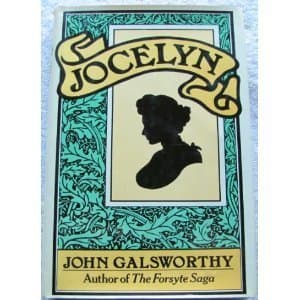
J O C E L Y N
All Rights Reserved
PART I, CHAPTER I, II, III, IV, V, VI, VII, VIII, IX, X, PART II, CHAPTER XI, XII, XIII, XIV, XV, XVI, XVII, XVIII, PART III, CHAPTER XIX, XX, XXI, XXII, XXIII, XXIV, XXV, XXVI, XXVII, XXVIII.
J O C E L Y N
BY
JOHN SINJOHN
AUTHOR OF “FROM THE FOUR WINDS”
LONDON DUCKWORTH & CO. 3, HENRIETTA STREET, COVENT GARDEN 1898
Printed by Ballantyne, Hanson & Co. At the Ballantyne Press
TO
J O S E P H C O N R A D
THIS BOOK IS AFFECTIONATELY DEDICATED
BY
THE AUTHOR.
“Isolation is surely the everyday condition, Union that for which we strive so wildly and never perfectly attain; and do not these two between them contrive all the ups and downs of life?”
J O C E L Y N
PART I
CHAPTER I
A light laugh came floating into the sunshine through the green shutters of a room in the Hôtel Milano. It grated on Giles Legard, who sat on the stone terrace outside, face to face with a naked fact for, perhaps, the first time in ten years. He uncrossed his legs, finished his coffee, and rose listlessly, looking down the dried river bed towards the smooth sea. He was alone with the sunlight, and it laid bare his face with a convincing stare. The indifferent, gentle egotism of the man had recoiled before the meaning of things for so long, that the reality painted itself upon him harshly.
His long, sun-browned face had taken back momentarily its original pallor, his grey eyes were contracted, his square chin and jaw thrust forward doggedly; the thin curve of his dark moustache seemed to droop more than usual, and the lines of weariness round his mouth and eyes were deepened, till ridge and furrow were stamped as on a coin. His figure, tall and well knit, looked very lean and listless.
Yet, he had awakened to the dominating fact that he had blood in his veins—an overwhelming torrent of blood that sang in his head and throbbed in his hands, at a touch, that mastered his reason and his will, at a look. He was changed, absolutely changed, so that he felt he did not know himself any longer, that his outward manner alone remained to him—the merest superficial manner, standing as the only bar to revelations the depth of which he was now attempting to sound.
The more effectually to cast the lead in the uncertain waters of reality, he crossed the terrace abruptly and leant against the half-opened French window of a large room, in the screened corner of which a woman, dressed in white, was lying in a long invalid chair, reading, and making pencil notes. She looked up as his shadow fell across the light.
“Ah! Giles, I have not had the fortune to see you greatly to-day. Will you perhaps have the goodness to give me the little green book lying on that table? Do not stay, je n’ suis pas bon compagnon. It does not go well, so that I just lie and read my Tolstoi.”
Her pale, sallow face lighted up with a smile of thanks as he put the book within her reach.
“Have you been amusing yourself to-day, mon cher? Presently you shall tell the little English friend I should like to see her.”
“Jocelyn is in the next room,” said Giles slowly.
“Ah! but not now, I have so much pain just now. Give her my love, and tell her—later.” Her black eyes from out of their hollows glanced half pitifully, half maliciously, at her husband, and then drooped resignedly with a quiver of bodily pain under brows that fell obliquely away from the furrow in the centre of her low Slav forehead.
“I’m very sorry that you’re so ill to-day. Can I do anything for you?” said Legard. It was all he found to say, and his face in the maze of his emotions expressed no one of them.
“Amuse yourself, mon cher, I have no want of anything, except to be alone, this is one of my bad days, you know.”
Again she looked at him, and, but for the pain of the whitened lips, one would have said she laughed. Giles turned away, but stopped at the window irresolutely; he had found no help. Irma Legard dropped her book with a slightly impatient gesture. A gleam of sun stealing round the screen fell on her face—she sat up, drew the screen forward, and sank back on her cushions with a sigh. The sound of a piano came from the next room.


